Vendo
Let Your Users Build Custom Features on Top of Your Product
What it does
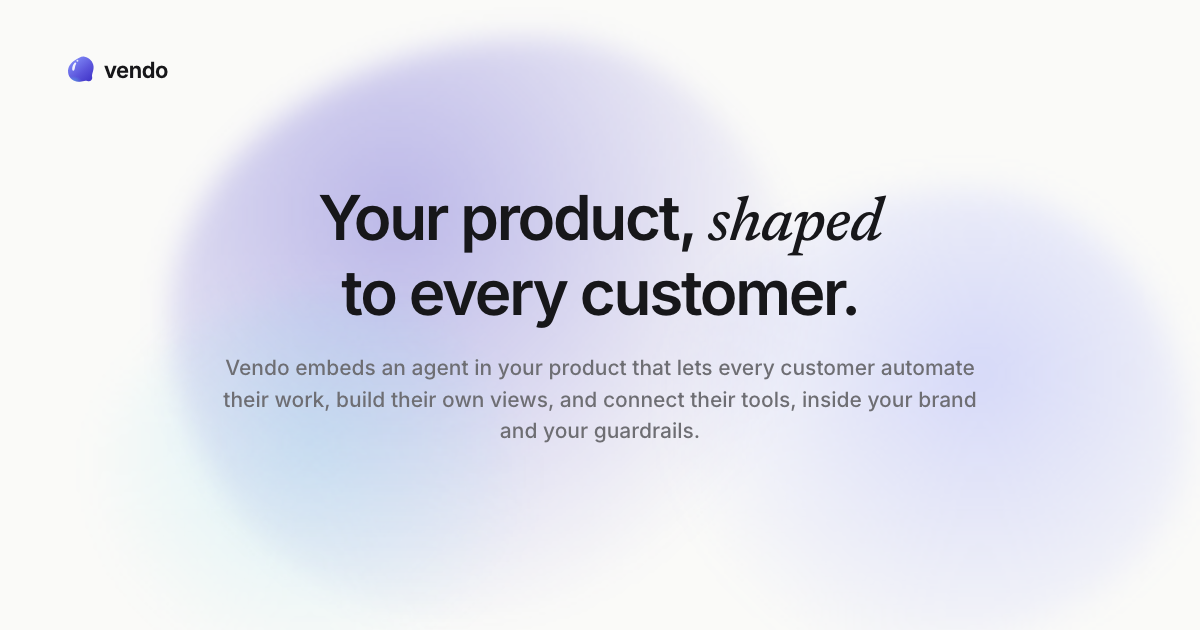
Vendo is an open-source customization layer that integrates into your SaaS product, allowing end-users to build their own features and micro-apps on top of your existing platform. It reads your codebase—components, API tools, theme, and permission rules—and lets users describe what they need in natural language. The system then assembles live, stateful micro-apps with actions, automations, and memory, all rendered within your brand and sandboxed to the user's existing permissions. Vendo also supports scheduled automations and can be surfaced inside your product, in Claude, or in ChatGPT.
Who it is for
Vendo is built for SaaS companies and product teams that want to offer deep customization without building it themselves. It targets B2B products where different customers have different workflows, edge cases, or compliance needs—especially those serving power users who want to build small internal tools or automations. The open-source nature and self-hosting option also appeal to startups and enterprises with strict data governance requirements.
Why it matters
Traditional SaaS products force all users into the same mold, leading to feature bloat or endless custom development requests. Vendo flips the model: instead of building every feature for every customer, you provide a platform where users assemble exactly what they need. This reduces your roadmap pressure, increases stickiness, and unlocks use cases you never anticipated. With Vendo, the product reshapes itself to each customer, all while staying within your brand and security boundaries. The company is backed by Y Combinator, adding credibility to its approach.
Launch signal
Vendo launched publicly with a clear Y Combinator backing and a functional open-source repository (runvendo/vendo on GitHub). The website demonstrates a working prototype for a hypothetical accounting app (“Maple”) and lists 16 real open-source apps that run Vendo nightly. Pricing is tiered from free (self-hosted, open-source) to enterprise (air-gapped, SOC 2, SAML). The product appears immediately usable with two commands (npm i @vendoai/vendo and npx vendo init).
Brand and naming
The name “Vendo” is short, memorable, and suggests “vendor” or “selling,” fitting a product that helps companies provide customization to customers. The tagline “Your product, shaped to every customer” clearly communicates value. The branding is modern, with a violet/purple mark and clean typography, and the open-source badge (Apache-2.0) signals transparency. The emphasis on “your brand, your rules” reinforces that the customization layer is invisible to end-users—everything feels native to the host product.
Related