ElevCode
Practice coding interviews with AI feedback across 13 languages.
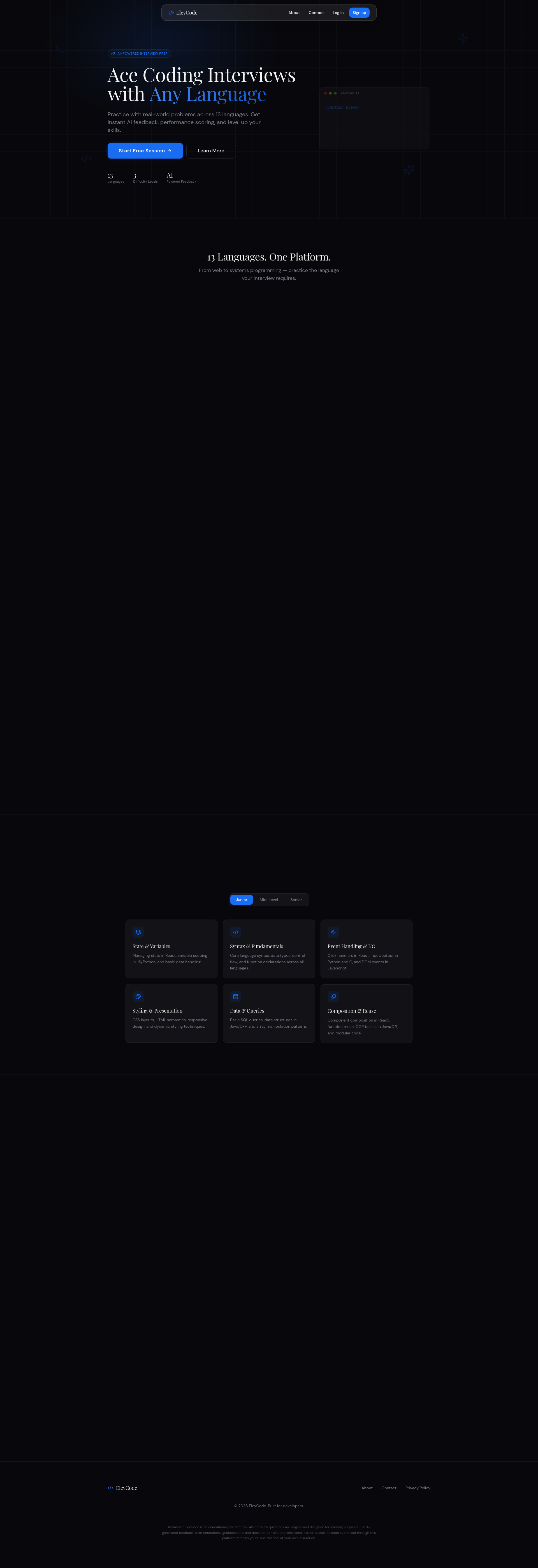
What it does
ElevCode is an AI-powered coding interview preparation platform. It offers real-world problems across 13 programming languages, including React, JavaScript, Python, Java, HTML, CSS, SQL, C, C#, C++, PHP, R, and Ruby. Users can choose from three difficulty levels (Junior, Mid, Senior) and receive instant AI feedback on code quality, performance, and best practices. The platform also provides a performance score (e.g., 92) and detailed analysis.
Who it is for
ElevCode is designed for developers preparing for technical interviews at top companies. It caters to a wide range of skill levels, from junior to senior, and supports multiple languages, making it suitable for full-stack, frontend, backend, data science, and systems programming roles. The platform is free to use, lowering the barrier for anyone to practice.
Why it matters
Traditional coding interview platforms often lack personalized feedback or limit language support. ElevCode addresses this by combining a broad language selection with AI-driven analysis, helping users identify weaknesses and improve efficiently. The focus on real interview problems (e.g., React hooks, SQL optimization, Java OOP) ensures practice is relevant. The instant feedback loop accelerates learning, which is critical for time-constrained job seekers.
Launch signal
ElevCode is currently available as a free web app at elevcode.lovable.app. The site is fully functional, offering a start-free-session call-to-action. No information about funding, team, or launch date is provided. The platform appears to be in early stages, with a clean UI and clear value proposition.
Brand and naming
The name "ElevCode" combines "elevate" and "code," suggesting skill improvement. The tagline "Ace Coding Interviews with Any Language" positions it as a versatile, AI-enhanced alternative to LeetCode or HackerRank. The brand is memorable and action-oriented, though the .lovable.app subdomain indicates it may be built on a no-code/low-code platform, which could affect scalability.
Related
Get more like this in our weekly newsletter.