
How Boast Is Revolutionizing R&D Tax Credits with AI: Less Effort, Higher Claims
Boast: The AI-Powered Platform Rewriting the Rules of R&D Tax Credit Claims
For any company investing heavily in research and development, the promise of tax credits is tantalizing. The Canadian SR&ED program alone returns billions of dollars to innovative businesses each year. Yet the process of actually claiming those credits has long been a bureaucratic nightmare—a maze of technical documentation, project categorization, and compliance requirements that can consume weeks of engineering time.
Boast is building a bridge across that gap. By combining artificial intelligence with in-house tax expertise, the platform aims to transform what has traditionally been a painful, manual process into something approaching frictionless. The company claims it can reduce client time commitment to roughly five hours per claim, compared to twenty or more hours with traditional consulting firms. That is not an incremental improvement; it is a fundamental rethinking of how R&D tax credit claims should work.
Product Curation & Core Value
At its heart, Boast solves a straightforward but punishing problem. Companies that invest in R&D are entitled to significant tax credits—the SR&ED program in Canada and similar federal and state programs in the United States. But identifying which activities qualify, gathering the necessary evidence, and structuring the claim correctly requires specialized knowledge that most engineering teams simply do not have.
The traditional alternatives have been equally unappealing. Do-it-yourself approaches often leave money on the table or trigger audits due to poorly structured claims. Hiring a Big Four accounting firm provides expertise but at a high cost and with a process that still demands substantial time from the client's technical staff. Boast occupies the middle ground: a software platform augmented by human experts who understand both the tax code and the technology landscape.
The platform's core functionality revolves around continuous project identification. Rather than waiting until year-end to reconstruct what happened, Boast's AI monitors development activity in real time, flagging work that may qualify for credits. This proactive approach is arguably the most important feature the company offers. When a developer spends three weeks building a novel algorithm or solving a significant technical uncertainty, that work is fresh and well-documented. Reconstructing the same effort six months later is far harder and more error-prone.
Evidence collection is another area where Boast differentiates itself. The platform integrates with common development tools—version control systems, project management software, time tracking applications—to automatically gather the documentation that tax authorities require. This includes technical descriptions, test results, and records of experimentation. The AI helps structure this evidence into a coherent narrative that aligns with program requirements, reducing the burden on engineers who would rather be building products than filling out tax forms.
The company's AuditShield service deserves particular attention. Boast reports an audit rate of 7 to 9 percent, compared to the Canada Revenue Agency's stated goal of auditing 25 percent of SR&ED claims. When audits do occur, the platform claims recovery rates of up to 95 percent of estimated claims. These numbers suggest that Boast's approach not only saves time but also produces higher-quality claims that withstand scrutiny. The lower audit rate likely stems from better documentation and more precise eligibility determination—both areas where AI can outperform manual processes.
Boast serves over 2,000 companies across North America, with a particular focus on Canadian tech firms eligible for SR&ED and Interactive Digital Media Tax Credits (IDMTC). The platform's industry coverage is broad, spanning software development, hardware engineering, life sciences, and digital media. Company size ranges from early-stage startups to established enterprises, with the platform offering different levels of support depending on the complexity of the claim.
Technical Implementation & Strategy
Boast's technical architecture reflects a pragmatic understanding of where AI adds genuine value versus where human expertise remains irreplaceable. The platform does not attempt to fully automate the tax credit process—a fool's errand given the complexity and variability of tax regulations across jurisdictions. Instead, it uses machine learning to handle the high-volume, pattern-recognition tasks that computers do well, while routing edge cases and strategic decisions to human specialists.
The AI engine appears to focus on three primary functions. First, it analyzes development activity data to identify potentially qualifying projects. This involves parsing commit messages, pull request descriptions, project management tickets, and time entries to understand what work was performed and whether it involved technical uncertainty or experimentation. Second, it maps this activity to specific tax credit categories, ensuring that claims are structured correctly for the relevant programs. Third, it generates draft documentation that human experts can review and refine.
This human-in-the-loop approach is both a technical strength and a strategic necessity. Tax regulations change frequently, and interpretation can vary between auditors. An AI system trained on historical data might miss subtle shifts in how authorities evaluate claims. By keeping experienced tax professionals in the workflow, Boast can adapt to regulatory changes without requiring a complete model retraining. The experts also provide the credibility that tax authorities expect—a stamp of approval that no algorithm can fully replace.
The platform's integration strategy is worth examining. Rather than building its own development tools, Boast connects to existing systems that companies already use. This reduces adoption friction significantly. A startup using GitHub, Jira, and Harvest can begin collecting evidence almost immediately without changing its workflows. The integrations also create a defensible moat: the more data Boast ingests from a client's development pipeline, the more accurate its identification and documentation become, making it harder for competitors to replicate the experience.
Boast's distribution strategy relies heavily on content marketing and direct sales. The company produces educational content about R&D tax credits, positioning itself as a thought leader in a niche but valuable space. The "Talk to an Expert" call-to-action that appears throughout the website suggests a sales process that begins with consultation rather than self-service signup. This makes sense given the high value of individual claims—clients are unlikely to trust a fully automated system with something as consequential as their tax filings without first speaking to a human.
The company's geographic focus on Canada and the United States is both a limitation and a strategic choice. R&D tax credit programs vary enormously between countries, and building expertise in multiple jurisdictions simultaneously would dilute the platform's value proposition. By concentrating on North America, Boast can offer deep knowledge of SR&ED, IDMTC, and US federal and state programs. Future expansion into other markets would require significant investment in local expertise and regulatory compliance.
Competitor Landscape & Industry Impact
Boast operates in a space that has historically been dominated by accounting firms and specialized consultants. The Big Four—Deloitte, PwC, EY, and KPMG—all offer R&D tax credit services, as do numerous boutique firms that focus exclusively on SR&ED claims. These traditional providers bring deep expertise and established relationships with tax authorities, but they also come with high costs and slow, manual processes.
The competitive landscape is shifting, however, as technology companies begin to target this market. Boast's primary differentiator is its AI-driven approach to evidence collection and project identification. Traditional consultants typically rely on interviews and manual document review to build claims. Boast automates much of this work, reducing the time burden on clients and potentially catching eligible projects that might otherwise be overlooked.
But there are trade-offs. Traditional firms offer a level of personal service and strategic advice that software cannot fully replicate. A Big Four partner can provide insights about how tax authorities are likely to view specific types of research, drawing on decades of experience with hundreds of claims. Boast's AI, while powerful, is ultimately limited by its training data and the quality of its integrations. For complex claims involving novel technologies or unusual corporate structures, a human expert may still be preferable.
The DIY approach remains a viable alternative for some companies. Small startups with straightforward R&D activities and limited budgets may find that the cost of using Boast or a consultant outweighs the incremental benefit. The platform's value proposition is strongest for companies with significant R&D spending and complex development pipelines—exactly the type of firms that are most likely to benefit from professional assistance.
Boast's impact on the industry is likely to be felt most acutely among mid-market consulting firms. These firms compete on expertise and personal service, but they lack the resources to build AI systems that can match Boast's automation capabilities. Over time, they may be forced to either partner with technology providers or develop their own software solutions. The Big Four, with their deep pockets and existing technology investments, are better positioned to respond, but they face the classic innovator's dilemma: cannibalizing their high-margin consulting services with lower-margin software offerings.
The company's reported audit rate of 7 to 9 percent is a significant competitive advantage if it holds up under scrutiny. A lower audit rate means less stress for clients and fewer resources spent defending claims. It also suggests that Boast's AI is producing higher-quality documentation than the industry average. If this trend continues, it could reshape how tax authorities evaluate R&D claims, potentially leading to greater acceptance of AI-assisted preparation.
Brand Naming & Domain Identity Analysis
The name "Boast" is a masterclass in concise brand positioning. It is short, memorable, and carries connotations of confidence and pride. The word suggests that companies using the platform have something to be proud of—their R&D achievements—and that Boast helps them claim the recognition they deserve. There is a subtle cleverness here: "boast" can also be read as "best" with a slight twist, reinforcing the quality message.
The choice of the .ai domain is particularly fitting. Boast is, after all, an AI-driven platform. The domain boast.ai immediately signals the company's technological focus, aligning with the growing trend of AI-native startups adopting the .ai TLD. In a world where AI domains have become highly sought after, Boast's choice is both practical and aspirational. It tells visitors that this is a modern, technology-forward company before they even read a single word of copy.
The domain also benefits from being short and brandable. "Boast" is six letters—easy to type, easy to remember, and unlikely to be misspelled. The .ai extension adds a layer of specificity that distinguishes the company from competitors who might use .com or .co domains. For a startup operating in the intersection of tax and technology, this domain choice reinforces the message that Boast is different from traditional accounting firms.
The company's use of country-specific subdirectories—/en-ca, /fr-ca, /en-us—demonstrates a thoughtful approach to internationalization. Canadian users see content tailored to their jurisdiction, including references to SR&ED and IDMTC. US users see federal and state program information. French-speaking Canadians get a localized experience. This segmentation is crucial for a company whose entire value proposition depends on navigating complex, jurisdiction-specific tax rules.
From a naming perspective, Boast avoids several common pitfalls. It is not descriptive in a boring way—"R&D Tax Credit Software" would be accurate but forgettable. It is not abstract to the point of meaninglessness. It strikes a balance between evoking the company's purpose and maintaining the flexibility to expand into adjacent services. If Boast eventually offers other types of innovation funding assistance, the name will still fit.
The tagline "R&D Tax Credits. No stress. Save time." directly addresses the pain points that drive customers to seek alternatives. It is simple, specific, and promises measurable outcomes. The emphasis on time savings is particularly smart, as it quantifies the value proposition in terms that resonate with busy engineering leaders.
Growth & Future Outlook
Boast appears to be in a strong growth phase. The company's website shows a 2025 copyright and a blog post dated 2026, suggesting ongoing operations and content production. The trust signals from over 2,000 companies, including recognizable names like OpsLevel, indicate a solid customer base and market validation.
The addressable market for R&D tax credit services in North America is substantial. The Canadian SR&ED program alone provides over $3 billion in tax credits annually, and US programs add billions more. As technology companies continue to invest heavily in R&D, the demand for efficient claim preparation services will only grow. Boast is well-positioned to capture a significant share of this market, particularly among companies that find traditional consulting too expensive or too time-consuming.
Several growth vectors are available. Geographic expansion within North America is the most obvious near-term opportunity. While Boast already serves both Canada and the United States, deeper penetration into specific US states with generous R&D tax credit programs could drive significant growth. California, New York, and Texas all offer substantial incentives for innovation, and companies in these states may be underserved by current providers.
Product expansion is another promising avenue. Boast could extend its platform to cover other types of innovation funding, such as government grants, patent box regimes, or green technology incentives. The company's existing AI infrastructure and integration capabilities provide a foundation for these adjacent services. Adding grant writing or patent support would increase the lifetime value of each customer and deepen the company's moat.
International expansion beyond North America is riskier but potentially lucrative. Countries like the United Kingdom, Australia, and Germany offer significant R&D tax incentives, and the market for software-assisted claim preparation in these regions is still nascent. However, entering new jurisdictions requires substantial investment in local expertise and regulatory compliance. Boast would need to hire tax professionals familiar with each country's programs and adapt its AI models to local requirements.
The company faces several risks that could temper its growth trajectory. Regulatory changes could reduce the value of R&D tax credits or alter the documentation requirements. Increased competition from both traditional consulting firms and new technology entrants could compress margins. And the inherent complexity of tax law means that even the best AI system will occasionally make errors, potentially triggering audits or penalties.
Despite these risks, Boast's fundamental value proposition is compelling. The platform saves time, reduces stress, and produces higher-quality claims. For companies investing millions in R&D, these benefits translate directly to bottom-line impact. As AI continues to improve and become more integrated into business operations, Boast's competitive advantage is likely to grow rather than diminish.
The final verdict: Boast is not just a clever name for a tax software company. It is a genuine innovation in a market that has been resistant to change. By combining AI with human expertise, the platform delivers a better experience for clients while producing claims that stand up to scrutiny. For any company serious about maximizing its R&D tax credits, Boast deserves a close look. The only question is whether the company can execute on its ambitious vision without losing the focus
Related
How Vicket Is Redefining Customer Support: A White-Label, Multi-Tenant Platform for SaaS and Agencies
Vicket offers a white-label, multi-tenant customer support platform that integrates in minutes, with no per-agent fees. Ideal for SaaS founders and agencies, it provides branded portals, ticket management, and automated workflows from a single dashboard.

ClearNights: The Ultimate Stargazing Forecast Tool That Combines 5 Factors Into One Score
ClearNights provides hour-by-hour stargazing forecasts for over 50,000 cities, combining seeing, clouds, moon, and twilight into a single 0–100 score. It also notifies users of celestial events like meteor showers and eclipses.
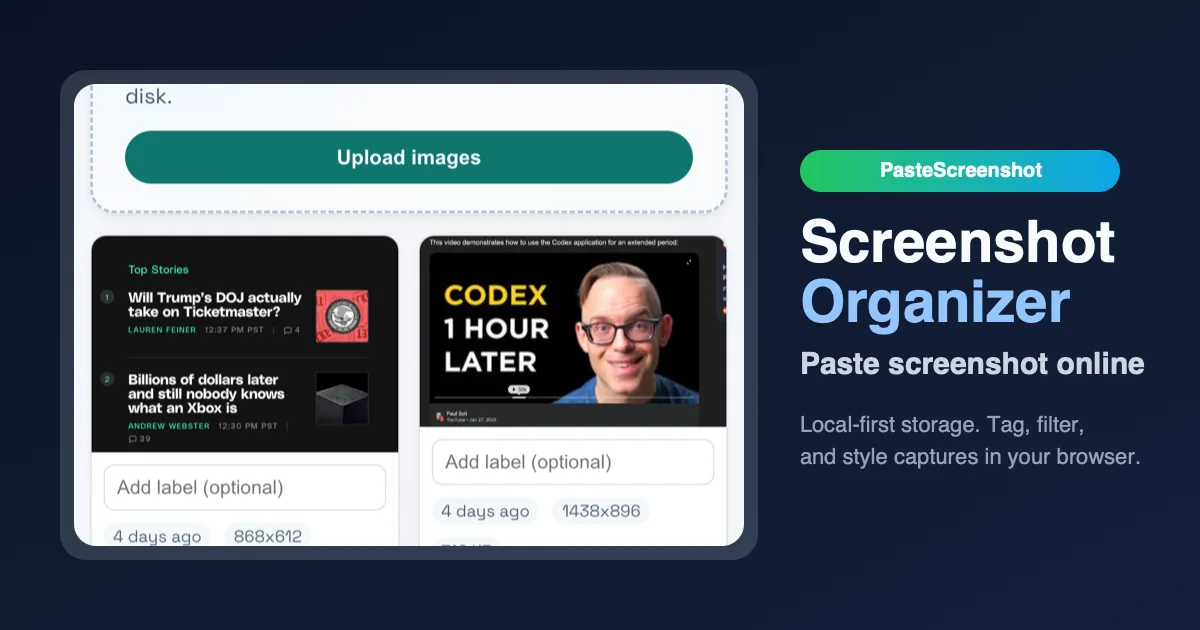
PasteScreenshot: A Local-First Screenshot Organizer for Privacy-Conscious Users
PasteScreenshot is a browser-based, local-first screenshot organizer that lets you paste, store, and manage screenshots without uploading to any server. Ideal for developers and designers seeking a private, clutter-free workspace.