
How Bounce Is Unifying Campus Communities: A Deep Dive into the All-in-One Social Platform for Events and Engagement
Product Curation & Core Value
University campuses are ecosystems buzzing with activity, yet the tools used to manage that energy are often disjointed. A student club might use GroupMe for chats, Venmo for collecting dues, Instagram for promotion, and Eventbrite for ticketing. This fragmentation creates friction. Bounce aims to eliminate it entirely by offering a single, mobile-first platform that consolidates chats, photos, payments, and event hosting into one unified experience.
At its core, Bounce solves a straightforward but painful problem: campus engagement is scattered across too many apps. For a student club president, the administrative overhead of juggling multiple platforms can be exhausting. Bounce replaces that chaos with a centralized hub. The platform allows users to discover communities, build followings, and host both free and paid events without leaving the app. This is particularly valuable for university environments where trust and convenience are paramount—students are more likely to engage when the process feels seamless and familiar.
The product is segmented into three primary user personas: student clubs, school administrators, and event hosts. For student clubs, Bounce offers tools to manage membership rosters, communicate with members, and organize events with integrated payment processing. For school administrators, the platform provides a bird’s-eye view of campus engagement, enabling them to oversee multiple clubs and events from a single dashboard. For event hosts, Bounce simplifies promotion and ticketing, allowing them to reach a built-in audience of fellow students.
Bounce’s value proposition extends beyond mere convenience. By centralizing social interactions, the platform fosters a sense of community that is often lost when communication is scattered across different apps. The tagline "Real Moments with Real Friends" underscores this focus on authentic connections rather than transactional interactions. This is a deliberate positioning choice that differentiates Bounce from more utilitarian event management tools.
The platform also supports monetization for event hosts through integrated payment processing, which is a critical feature for student clubs that rely on ticket sales or membership fees. By handling payments natively, Bounce removes the need for third-party ticketing services, reducing fees and administrative overhead for organizers. This end-to-end integration is a significant advantage over competing solutions that require users to stitch together multiple services.
Technical Implementation & Strategy
Bounce is a mobile-first platform, available on both iOS and Android. This is a sensible technical decision given its target audience: university students are overwhelmingly mobile-dependent, often accessing the internet primarily through their phones. By prioritizing mobile development, Bounce ensures that its core features—chat, event discovery, ticketing, and payment processing—are accessible on the devices students actually use.
The technical architecture likely involves a combination of real-time messaging infrastructure, payment gateway integration, and event management APIs. Real-time chat, a key feature, requires robust WebSocket or similar technology to deliver instantaneous message delivery. This is not trivial to scale, especially during high-traffic periods like frosh week or major campus events. Bounce’s ability to handle these spikes without degradation will be a critical factor in user retention.
Payment processing is another technically sensitive area. Bounce must comply with PCI-DSS standards when handling credit card information, which adds complexity and liability. The platform likely partners with a third-party payment processor like Stripe or Square to handle the heavy lifting, but the integration must be seamless enough that users never feel like they are leaving the app. Any friction in the payment flow could lead to abandoned transactions and frustrated organizers.
The platform’s distribution strategy is heavily reliant on university partnerships. Rather than trying to acquire individual users through broad consumer marketing, Bounce targets entire campus ecosystems. The presence of partner logos from Dalhousie University, Western University, UCLA, and UT Austin suggests a land-and-expand model: secure a contract with a university’s administration, then roll out the platform to all student clubs and organizations on that campus. This approach creates a network effect—the value of Bounce increases as more students and clubs join, making it more attractive for the next university to sign on.
One of Bounce’s key technical advantages is its data aggregation capability. By centralizing chats, photos, payments, and event data, the platform can offer administrators insights that were previously impossible to obtain. For example, a dean of student life could see which clubs have the highest engagement, which events generate the most revenue, and which communication channels are most effective. This analytics layer transforms Bounce from a simple tool into a strategic asset for university administration.
Competitor Landscape & Industry Impact
Bounce operates in a crowded space that includes both general-purpose social platforms and specialized campus engagement tools. The most direct competitors are GroupMe, Eventbrite, and campus-specific apps like CampusGroups or Presence. Each of these solutions addresses a piece of the puzzle, but none offers the all-in-one integration that Bounce provides.
GroupMe, owned by Microsoft, dominates campus group chats but lacks event management and payment features. Eventbrite excels at ticketing but is not designed for ongoing community management. CampusGroups and Presence offer more comprehensive campus engagement suites but often feel clunky and enterprise-focused, lacking the consumer-grade user experience that students expect. Bounce’s advantage lies in combining the best elements of all these tools into a single, polished mobile app.
The trade-off, however, is that Bounce requires users to adopt an entirely new platform rather than integrating with tools they already use. This is a significant adoption hurdle. A student club that already has 200 members on GroupMe may be reluctant to migrate everyone to Bounce, even if the new platform offers superior functionality. Bounce must therefore offer a compelling enough experience—and enough university-level mandates—to overcome this inertia.
The acquisition by Showpass is a strong signal of market validation. Showpass is a ticketing and event management platform that serves live events, and the deal will expand its presence to over 70 percent of Canada’s top-ranked universities. This suggests that Bounce’s product-market fit was strong enough to attract a strategic acquirer, and that the combined entity will have even greater resources to scale. For Bounce users, the acquisition could mean faster feature development, deeper integrations, and a more sustainable long-term roadmap.
Bounce’s impact on the industry is twofold. First, it raises the bar for what a campus engagement platform should offer. Competitors will now need to consider adding chat, payments, and event hosting into a single product, or risk being seen as incomplete. Second, Bounce demonstrates that there is a viable business model in serving the university market, which is often overlooked by larger tech companies. This could encourage more startups to focus on higher education, leading to a wave of innovation in campus technology.
Brand Naming & Domain Identity Analysis
The name "Bounce" is short, energetic, and memorable. It evokes a sense of movement and fun, which aligns perfectly with the vibrant, social nature of campus life. The word is active—it suggests jumping into an event, bouncing between conversations, and the lively rhythm of university social scenes. This is a strong naming choice for a brand targeting young adults, as it feels informal and approachable rather than corporate or sterile.
From a naming strategy perspective, "Bounce" scores high on the three pillars of effective startup naming. First, it is highly brandable. The word is common but not generic in this context, allowing the company to own a distinct mental space. Second, it is easy to pronounce and spell in English, which is critical for word-of-mouth marketing among students. Third, it is short—just six letters—making it easy to type on mobile keyboards and fit into app icons.
The domain choice, bouncelife.com, is a pragmatic decision. The exact-match domain bounce.com is almost certainly owned by a larger entity or parked by a domain investor, making it prohibitively expensive for a startup. Adding the word "life" creates a compound domain that retains the core brand identity while being available and affordable. This is a common and sensible strategy for startups that cannot secure the ideal .com domain.
Evaluating bouncelife.com against the three pillars of startup naming:
AI Domain Naming: While Bounce itself is not an AI company, the naming principles used here are relevant. The name is short, memorable, and easy to type—qualities that are critical for any digital product. AI-powered domain generation tools would likely rank "Bounce" highly for its phonetic clarity and brand potential.
TLD Intelligence: The choice of .com over newer TLDs like .io, .app, or .social is a strong signal of maturity. .com remains the gold standard for trust and recall, especially for a platform that handles payments and sensitive user data. Using a .com domain reassures users and partners that Bounce is a legitimate, established entity. While a .app domain could have been technically interesting given the mobile-first nature of the product, .com was the safer and wiser choice.
Startup Naming Playbook: Bounce follows the classic playbook of using a single, evocative word as the brand name, then appending a generic descriptor to secure the .com domain. "Bouncelife" is a compound that works well—it is not awkward or forced. The domain is easy to remember and type, and it clearly communicates the platform’s focus on lifestyle and community rather than just event ticketing.
One potential downside is that the domain is somewhat long at 11 characters. While this is acceptable, it is not as ideal as a shorter domain like bounce.co or bounce.io. However, the trust and SEO benefits of .com likely outweigh the slight increase in length. If Bounce continues to grow, it may eventually acquire bounce.com, but for now, bouncelife.com is a solid choice.
Growth & Future Outlook
Bounce’s growth trajectory is closely tied to its ability to expand university partnerships. The acquisition by Showpass provides both capital and distribution, which should accelerate this process. With Showpass’s existing relationships in the live events industry, Bounce can now offer a more complete solution that extends beyond campus borders—for example, enabling student clubs to host events that are open to the broader community.
The platform’s future likely includes deeper integrations with university administrative systems, such as student information systems (SIS) and learning management systems (LMS). This would allow Bounce to verify student identities, sync academic calendars, and offer personalized event recommendations. Such integrations would increase switching costs for universities, making it harder for them to replace Bounce once it is embedded.
Monetization will be an important area to watch. Currently, Bounce likely generates revenue through transaction fees on paid events and possibly through premium features for clubs or administrators. As the user base grows, there may be opportunities to offer advertising or sponsored content, though this must be handled carefully to avoid alienating the student audience. A freemium model, where basic features are free and advanced analytics or customization requires a subscription, could be a viable path.
The main risk for Bounce is competition from larger platforms. Facebook Groups and Discord have both made efforts to capture campus communities, and they have significantly more resources. However, their general-purpose nature means they lack the specific features—like integrated payments and university admin dashboards—that make Bounce compelling. If Bounce can maintain its focus on the university niche and continue to innovate, it has a defensible position.
In the long term, Bounce could expand beyond universities into other community-focused environments, such as corporate campuses, conference organizers, or residential communities. The core product—a centralized hub for chats, events, and payments—is applicable to any group that needs to coordinate activities. However, expanding too quickly could dilute the brand and strain engineering resources. The smartest move is to double down on the university market first, achieve dominance, and then explore adjacent verticals.
Bounce is a well-executed example of a vertical SaaS product that solves a real, painful problem for a specific audience. Its name and domain are thoughtfully chosen, its product is tightly focused, and its acquisition by Showpass provides a strong foundation for growth. For universities looking to improve campus engagement and for students tired of juggling a dozen apps, Bounce offers a compelling alternative. The platform’s success will ultimately depend on its ability to maintain its community-first ethos while scaling to meet the demands of a growing user base.
Related
How Vicket Is Redefining Customer Support: A White-Label, Multi-Tenant Platform for SaaS and Agencies
Vicket offers a white-label, multi-tenant customer support platform that integrates in minutes, with no per-agent fees. Ideal for SaaS founders and agencies, it provides branded portals, ticket management, and automated workflows from a single dashboard.

ClearNights: The Ultimate Stargazing Forecast Tool That Combines 5 Factors Into One Score
ClearNights provides hour-by-hour stargazing forecasts for over 50,000 cities, combining seeing, clouds, moon, and twilight into a single 0–100 score. It also notifies users of celestial events like meteor showers and eclipses.
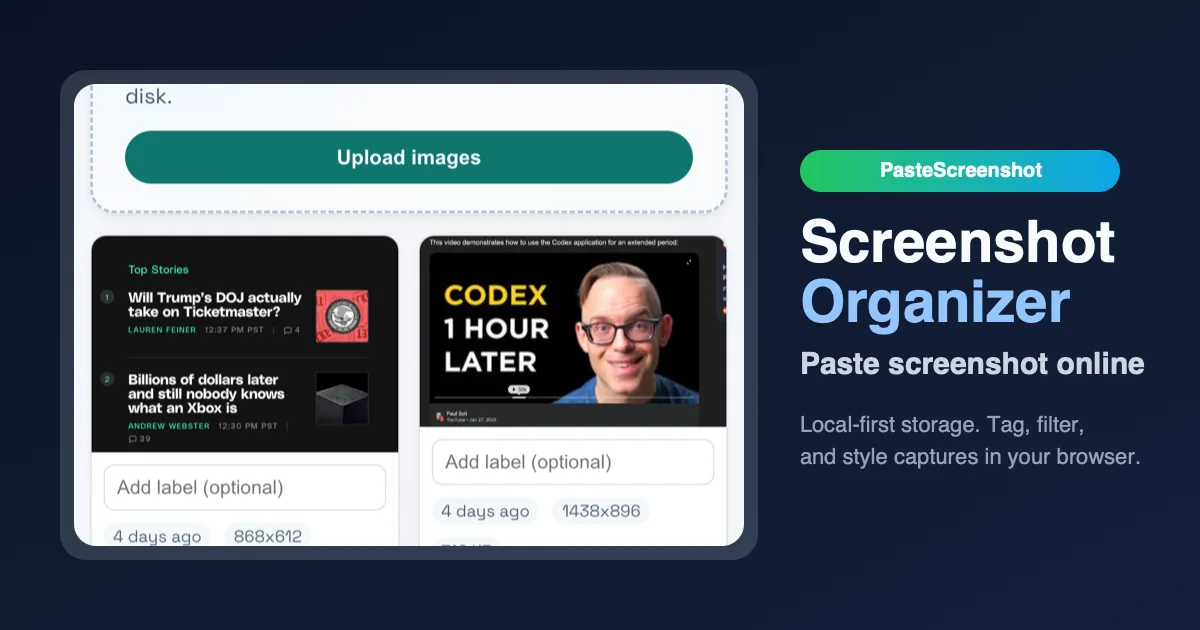
PasteScreenshot: A Local-First Screenshot Organizer for Privacy-Conscious Users
PasteScreenshot is a browser-based, local-first screenshot organizer that lets you paste, store, and manage screenshots without uploading to any server. Ideal for developers and designers seeking a private, clutter-free workspace.