How EasyChef Is Redefining Meal Prep: AI-Powered Recipes to Reduce Food Waste
Product Curation & Core Value
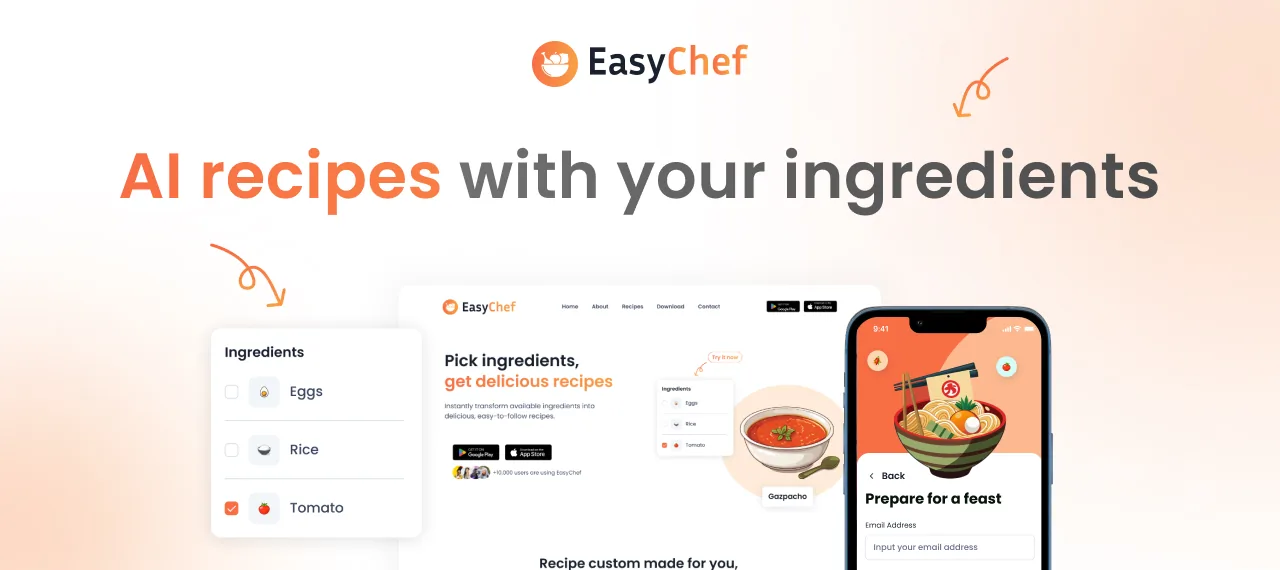
EasyChef addresses a problem that plagues millions of households daily: the dreaded "what's for dinner?" question, typically answered by staring into an almost-empty fridge before ordering takeout or making an unnecessary grocery run. The app flips this script entirely. Instead of starting with a recipe and then buying ingredients, users begin with what they already have—those half-used bags of rice, the lingering tomatoes, the carton of eggs that's about to expire—and let AI generate meals from that reality.
The core workflow is elegantly simple. Open the app, tap through your pantry items, and EasyChef's AI instantly produces a curated list of recipes that use those exact ingredients. But the product goes deeper than a basic ingredient matcher. It considers dietary preferences, from gluten-free to paleo, and even accounts for the cooking equipment you own. If you only have a microwave and a stovetop, EasyChef won't suggest recipes requiring an air fryer or sous-vide machine. This contextual awareness transforms the app from a novelty into a genuinely practical kitchen companion.
Beyond recipe generation, EasyChef layers on features that reinforce its core value proposition. The smart shopping list turns any recipe or collection into an organized grocery list, making it easy to buy exactly what you need without waste. Users can save favorite recipes into custom collections, creating a personalized cookbook that evolves with their tastes. The app also supports global cuisine options, letting users explore Mexican, Indian, Italian, and other international dishes without leaving their ingredient constraints.
The subscription model is refreshingly straightforward: €2.99 per month or €29.99 per year. That's roughly the cost of a single takeout meal in many cities, making it an easy upsell for anyone who cooks regularly. The free tier presumably offers enough functionality to demonstrate value, though the website doesn't detail feature limitations. With over 1,000 home cooks already onboard and a Product Hunt launch under its belt, EasyChef has shown early traction in a crowded but hungry market.
Technical Implementation & Strategy
EasyChef's technical architecture revolves around its AI-powered recipe generation engine, which sits at the heart of the user experience. The system must solve a non-trivial combinatorial problem: given a set of ingredients, dietary restrictions, and available equipment, generate recipes that are both palatable and practical. This requires a sophisticated understanding of culinary logic—not just ingredient matching, but knowledge of flavor profiles, cooking techniques, and substitution possibilities.
The AI model likely uses a combination of natural language processing and recommendation algorithms trained on large recipe datasets. When a user inputs "eggs, rice, potato, tomato," the system doesn't just search for recipes containing those four items. It understands that eggs and rice can become a fried rice dish, that potatoes and tomatoes can form the base of a Spanish tortilla or a simple shakshuka variation, and that the combination could yield multiple cuisines. The model must also handle edge cases: what if a user has only three ingredients? Can it suggest a minimalist dish, or does it require a minimum threshold?
Distribution strategy is multi-platform, with native iOS and Android apps available for download. The website serves as a marketing funnel, featuring a recipe blog that drives organic traffic through SEO-optimized content. Each blog post links back to the app, creating a content flywheel that attracts users searching for specific recipes. The "Browse Recipes" section on the site also functions as a lead generation tool, letting visitors see what EasyChef can produce before committing to a download.
One notable technical advantage is the app's ability to handle real-time ingredient input. Users can add items one by one, and the recipe suggestions update dynamically. This requires efficient backend processing to avoid lag, especially as the ingredient list grows. The AI must also cache or precompute common ingredient combinations to deliver near-instant results. The app's design, with its clean interface and step-by-step workflow, suggests a focus on user experience over raw feature count—a wise choice for a product targeting busy home cooks who value speed over complexity.
The subscription payment infrastructure is straightforward, leveraging standard in-app purchase systems on both platforms. This gives EasyChef access to Apple and Google's billing ecosystems, though it also means the company pays the typical 15-30% platform commission. The pricing is competitive with other premium recipe apps, but the value proposition of reducing food waste and saving money on groceries provides a strong ROI argument for users.
Competitor Landscape & Industry Impact
The recipe app space is fiercely competitive, with established players like Yummly, Allrecipes, and Tasty dominating the market. What sets EasyChef apart is its ingredient-first approach. Most competitors operate on a search-and-browse model: users find a recipe they like, then go shopping for ingredients. EasyChef inverts this logic, making it the go-to tool for the "I have stuff, what can I make?" scenario that happens in kitchens every single day.
Direct competitors include apps like SuperCook and MyFridgeFood, which also focus on ingredient-based recipe discovery. SuperCook, for instance, lets users check off ingredients they have and then shows matching recipes. However, EasyChef's AI-driven personalization—considering dietary restrictions, cooking equipment, and global cuisines—gives it a depth that simpler matching tools lack. The inclusion of equipment awareness is particularly clever; it prevents the frustration of being recommended a recipe that requires an oven when you only have a microwave.
Another competitor is the broader category of meal planning apps like Mealime and Paprika, which offer grocery list generation and recipe organization. EasyChef competes here by positioning itself as a waste-reduction tool first, meal planner second. This differentiation is crucial because food waste is a growing consumer concern, especially among environmentally conscious millennials and Gen Z home cooks. By aligning with sustainability values, EasyChef taps into a market that's willing to pay for solutions that align with their ethics.
The industry impact of EasyChef's approach is subtle but significant. It shifts the paradigm from recipe discovery to ingredient utilization, which could influence how other apps design their features. If EasyChef gains traction, we might see Yummly or Allrecipes adding "what can I make with these ingredients?" filters as a core feature rather than an afterthought. The app also normalizes the idea of AI-assisted cooking, moving beyond simple recipe suggestions to truly personalized meal planning that accounts for real-world constraints.
However, EasyChef faces challenges. The name "EasyChef" is generic, making it hard to rank for broad keywords like "recipe app" or "meal planner" without significant SEO investment. The company's blog strategy, producing recipe content optimized for search, is a smart countermeasure, but it requires consistent effort to build authority. Additionally, the app's reliance on user-input ingredients means it's only as good as the data users provide. If someone forgets to add an ingredient, the recipe suggestions will be suboptimal. The onboarding process must be designed to encourage thorough ingredient logging without being tedious.
Brand Naming & Domain Identity Analysis
The name "EasyChef" is a double-edged sword. On one hand, it's instantly understandable—the combination of "easy" and "chef" communicates simplicity and culinary expertise in a single compound word. It's memorable, pronounceable, and works across languages. On the other hand, it's highly generic. A Google search for "easy chef" returns millions of results, including cookbooks, kitchen gadgets, and other recipe sites. This creates significant SEO competition that EasyChef must overcome through domain authority, content marketing, and brand building.
The choice of the .ai domain is strategic and reflects modern naming best practices. While easychef.com would be ideal, it's almost certainly taken or prohibitively expensive. The .ai TLD, originally assigned to Anguilla, has become the de facto standard for AI-powered startups. By using easychef.ai, the company signals its AI-first approach while securing a short, brandable URL. This aligns perfectly with the three pillars of effective startup naming:
AI Domain Naming: The .ai extension immediately communicates that EasyChef is an AI-powered product, not just another recipe website. For users browsing app stores or seeing social media ads, the .ai suffix acts as a trust signal, suggesting technological sophistication. This is particularly valuable in a market where "AI" is a buzzword—EasyChef's domain backs up the claim with visible proof.
TLD Intelligence: Choosing .ai over .com, .app, or .io demonstrates awareness of current TLD trends. As discussed in our .ai domain guide, the .ai TLD has seen explosive growth, driven by AI startups wanting to signal their focus. EasyChef benefits from this trend, associating itself with the AI boom while avoiding the saturated .com space. The trade-off is that .ai domains are more expensive to renew than traditional TLDs, and some users still default to .com when typing URLs.
Startup Naming Playbook: The name follows the playbook of combining a benefit word ("easy") with a descriptive noun ("chef"). This pattern is proven in consumer apps—think of Evernote, Slack, or Zoom. It's direct, functional, and leaves no ambiguity about what the product does. However, it lacks the distinctiveness that makes a brand truly ownable. If a competitor launches "SimpleCook" or "QuickChef," the differentiation becomes blurry.
The logo and visual identity reinforce the brand promise. The logo, a simple chef's hat icon, is clean and recognizable. The website uses a warm color palette with gradient circles and food photography that feels approachable rather than sterile. The tagline—"Turns ingredients into delicious recipes saving time, money, and reducing waste"—is comprehensive but could be tighter. The more concise "Never wonder what's for dinner again" on the hero section is punchier and more memorable.
For a deeper dive into how effective domain naming can make or break a startup, see our analysis in AI-Powered Domain Generation: The Future of Naming. EasyChef's domain strategy is a textbook example of using TLD choice to reinforce brand positioning, even if the base name is generic.
Growth & Future Outlook
EasyChef's growth trajectory depends on its ability to convert early adopters into loyal users and expand through organic channels. The 1,000+ home cooks milestone is respectable for a launch, but the real test is retention. Recipe apps often suffer from high churn as users try them once, get a few meals, and then forget about them. EasyChef must build habits—perhaps through push notifications suggesting "you have ingredients that could become dinner tonight" or weekly meal plan summaries.
The subscription model provides recurring revenue, but the €2.99/month price point means the company needs a large user base to generate meaningful income. If EasyChef can grow to 10,000 subscribers, that's roughly €30,000 per month in revenue—enough to sustain a small team but not enough for aggressive marketing spend. The company will likely need to explore additional revenue streams, such as premium features (nutrition tracking, meal prep scheduling) or partnerships with grocery delivery services.
Content marketing will be crucial for SEO growth. The recipe blog, with posts like "Creamy Chicken and Spinach Pasta" and "Beef and Black Olive Stir Fry," targets long-tail keywords that users search when they have specific ingredients. Over time, this content library can build domain authority for easychef.ai, helping it rank for broader terms. The company should also consider user-generated content, encouraging users to share their EasyChef-generated meals on social media with a branded hashtag.
International expansion is another growth lever. The app already supports global cuisines, and the subscription pricing in euros suggests a European focus. Expanding to the US market would require localization of ingredient databases, measurement units (metric vs. imperial), and possibly pricing adjustments. The .ai domain is globally neutral, which helps.
The biggest risk is competition from larger players. If Google integrates ingredient-based recipe search into its main search results, or if Apple adds similar functionality to its Health or Notes apps, EasyChef could be marginalized. The company's best defense is to build a strong community and brand loyalty before the giants move in. The Product Hunt launch and early user testimonials are good starts, but EasyChef needs to create a product that users love enough to evangelize.
Expert Take: EasyChef is a well-executed solution to a genuine problem, backed by smart technical choices and a clear value proposition. The ingredient-first approach differentiates it in a crowded market, and the .ai domain choice is savvy. However, the generic name and competitive landscape mean that growth will require relentless execution on content marketing, user retention, and product refinement. If the team can build a loyal user base before the copycats arrive, EasyChef has a real shot at becoming the default app for the "what's for dinner?" dilemma.
Related
How FetchSandbox Is Revolutionizing API Testing with a Memory Graph for AI Agents
FetchSandbox offers a sandbox environment with 60+ pre-configured APIs and a unique memory graph that remembers failure patterns, enabling deterministic bug reproduction for both human developers and AI coding assistants.

How UX/UI Principles Is Bringing Research Back to Design: 185 Laws, 2,300 Citations & AI Validation
UX/UI Principles offers 185 research-backed design principles with 2,300+ citations, AI-powered validation tools, and 600+ prompts for Cursor, Claude, and ChatGPT—helping designers catch AI mistakes before users do.
How OctoAlly Pro Is Putting AI Coding Agents on Autopilot with Kanban and Mobile Access
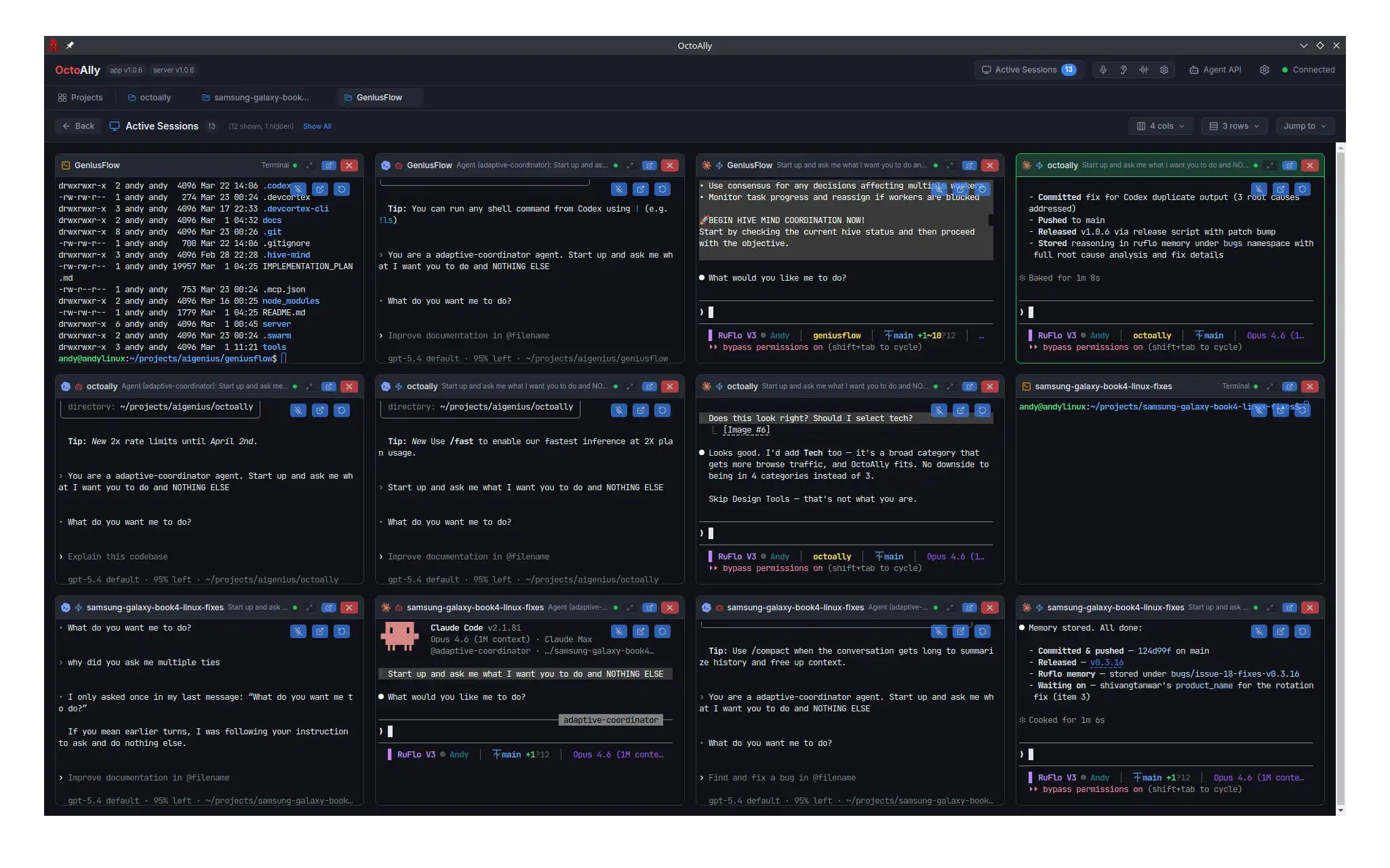
OctoAlly Pro adds a kanban board, automated multi-agent workflows, and full mobile access to AI coding agents like Claude Code and Codex, letting developers offload long-running tasks and stay connected from anywhere.