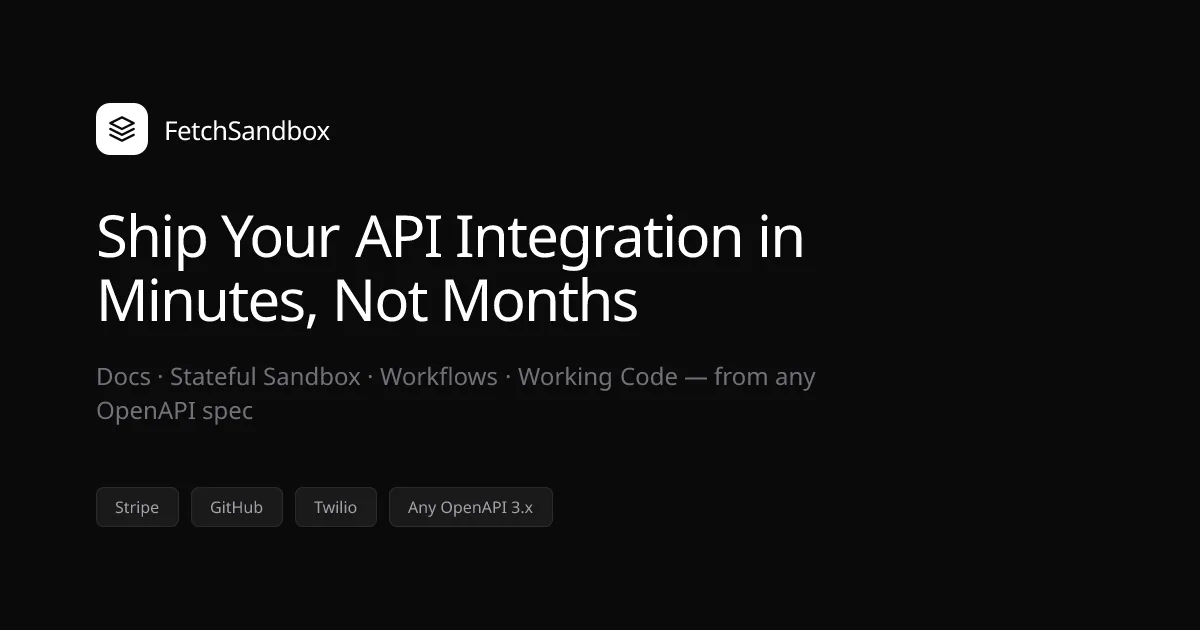
How FetchSandbox Is Revolutionizing API Testing with a Memory Graph for AI Agents
Product Curation & Core Value
API integration testing has long suffered from a fundamental blind spot. Most testing tools validate that a request returns a 200 OK, then declare victory. But in the real world, the 200 OK is just the opening act. The real drama unfolds in webhook delivery, retry logic, async event chains, and state transitions—areas where traditional mock servers and unit tests consistently fall short. FetchSandbox was built to address precisely this gap.
The core product is a sandbox environment that simulates over 60 pre-configured APIs—including Stripe, GitHub, OpenAI, Twilio, Clerk, Resend, and WorkOS—without consuming real API quota or requiring access to staging environments. Developers and AI coding agents can fire requests against these simulated endpoints and observe the full lifecycle of an integration: webhook delivery, retry behavior, failure modes, async events, and state changes. The platform doesn't just return a mock response; it simulates the actual behavior of each API, including its quirks and edge cases.
What truly sets FetchSandbox apart is its "memory graph." This is not a simple logging mechanism. The memory graph captures failure patterns across workflow runs, building a persistent model of what breaks and why. When a developer encounters a bug, they can query the memory graph to reproduce it deterministically—same inputs, same failure, every time. This is a critical capability for debugging complex, stateful integrations where race conditions, webhook ordering, and idempotency issues are notoriously hard to pin down. The memory graph effectively creates a shared understanding between the developer and the tool about what "correct" behavior looks like, encoding spec-specific failure modes that can be checked automatically.
Each workflow run produces a public, replayable receipt URL. This is a deceptively powerful feature. A developer can paste this URL into a PR comment or a Slack thread, and anyone with the link can replay the exact same sequence of API calls, webhook deliveries, and state transitions that led to a bug or verified a fix. This eliminates the "works on my machine" problem and provides a level of auditability that is rare in API testing tools. The receipt is not just a log; it is a deterministic proof of what happened, which can be inspected, challenged, and verified by peers or AI agents.
The product integrates via MCP (Model Context Protocol) into popular IDEs and AI assistants: Cursor, Claude Code, Windsurf, VS Code, and Codex CLI. This means that when an AI coding agent generates integration code, it can immediately test that code in FetchSandbox without leaving the editor. The agent can observe the full behavior of its generated code, catch failures, iterate, and produce a verified integration—all within a single workflow. For teams using AI-assisted development at scale, this is transformative. It turns the AI agent from a code generator that occasionally produces plausible but broken integrations into a reliable contributor whose work can be validated before hitting production.
Technical Implementation & Strategy
FetchSandbox's technical architecture is built around the concept of deterministic simulation. Each sandbox instance is not a stateless mock but a stateful environment that tracks the lifecycle of every request, webhook, and state transition. The memory graph sits at the center of this architecture, acting as both a recording mechanism and a pattern-matching engine.
When a developer runs a workflow, FetchSandbox records every interaction with the simulated API: the request payload, the response, any webhooks that were triggered, the timing of those webhooks, and the final state of the integration. This data is stored in the memory graph as a directed graph of events. When a bug is reported, the developer can ask FetchSandbox to "reproduce bug X." The platform queries the memory graph for the pattern associated with that bug, sets up the sandbox in the exact state that triggered it, and replays the sequence of events. Because the simulation is deterministic—same inputs, same random seed, same timing—the bug reproduces identically. This is a stark contrast to traditional testing where flaky tests and non-deterministic behavior make debugging a nightmare.
The supply chain of pre-configured APIs is another technical moat. FetchSandbox has invested in modeling the behavior of 60+ real APIs, including their webhook schemas, error codes, rate limiting responses, and async event patterns. This is not trivial. Each API has its own idiosyncrasies: Stripe's idempotency keys, Twilio's delivery status callbacks, GitHub's webhook retry policies. FetchSandbox simulates these behaviors faithfully, so that a developer testing against the sandbox gets the same failure modes they would encounter in production. This reduces the "drift" between test and production that plagues traditional mock servers, where a test might pass but the real integration fails because the mock didn't simulate a subtle timing issue or a missing webhook.
The MCP integration is strategically smart. By connecting directly into the AI coding assistant's workflow, FetchSandbox becomes part of the agent's feedback loop. The agent generates code, runs it against the sandbox, observes the result, and iterates. This is much faster than the traditional cycle of writing code, deploying to staging, running integration tests, and debugging failures. For teams using Cursor or Claude Code to generate integration code, FetchSandbox provides a "test in place" capability that dramatically reduces iteration time. The 1,600+ MCP installs suggest that this integration is resonating with early adopters.
One potential technical hurdle is scalability. As the number of users and workflow runs grows, the memory graph could become expensive to store and query. Each run produces a detailed graph of events, and storing these indefinitely could lead to ballooning storage costs. FetchSandbox will need to implement data retention policies, compression, or tiered storage to manage this. Additionally, deterministic replay across different sandbox instances requires careful management of shared state and random seeds. If two workflows run concurrently and interact with overlapping simulated state, the replay guarantee could break. The platform likely isolates each sandbox instance to avoid this, but that adds complexity to the infrastructure.
Competitor Landscape & Industry Impact
FetchSandbox enters a crowded space with established players like Postman, WireMock, Mockoon, and Stripe's own test mode. Each of these tools addresses a slice of the API testing problem, but none of them combine deterministic replay, memory graphs, and AI agent integration in the way FetchSandbox does.
Postman's mock servers are the most direct competitor. Postman allows developers to create mock endpoints that return predefined responses. However, these mocks are stateless. They don't simulate webhook delivery, retry logic, or async events. A developer testing a Stripe integration in Postman might get a 200 OK for a charge request, but they won't see the charge.succeeded webhook fire, or the payment_intent.succeeded event that follows. FetchSandbox's stateful simulation covers these scenarios, making it more suitable for complex, event-driven integrations.
WireMock is a popular open-source tool for mocking HTTP services. It is powerful and flexible, but it requires significant setup and configuration. Developers must define stubs, match rules, and response templates manually. FetchSandbox reduces this friction by providing pre-configured APIs out of the box. A developer can start testing a Stripe integration in minutes without writing a single WireMock stub. The trade-off is that WireMock offers more customization for edge cases that FetchSandbox might not cover. If a developer needs to simulate a very specific API behavior that FetchSandbox hasn't modeled, they are stuck. FetchSandbox's value proposition depends on its library of pre-configured APIs being comprehensive enough to cover most use cases.
Stripe's test mode is a direct competitor for Stripe-specific testing. It provides a sandbox environment with test card numbers, webhook endpoints, and simulated events. For pure Stripe integrations, test mode is often sufficient. But FetchSandbox's advantage is multi-API testing. A developer building an integration that touches Stripe, Twilio, and Clerk needs to coordinate testing across all three. Stripe's test mode doesn't help with Twilio. FetchSandbox provides a unified sandbox where all three APIs can be tested together, with webhooks and state changes flowing between them. This cross-API testing is a significant differentiator.
The industry impact of FetchSandbox could be substantial. As AI coding assistants become more prevalent, the need for deterministic, replayable testing environments grows. AI agents generate code at a speed that humans cannot match, but that code needs to be verified. Traditional testing workflows are too slow to keep up. FetchSandbox's integration with MCP and its ability to reproduce bugs deterministically addresses this bottleneck. It provides the missing "verification layer" for AI-generated integration code, which could accelerate the adoption of AI coding assistants in production environments.
However, there are trade-offs. FetchSandbox is a cloud-based service, which means developers cannot run it offline or in air-gapped environments. For security-conscious teams or those with strict data residency requirements, this could be a dealbreaker. The platform's FAQ mentions questions about SOC2 compliance and self-hosted options, but currently it appears to be a SaaS-only offering. Competitors like WireMock, being open-source and self-hosted, have an advantage in these scenarios.
Brand Naming & Domain Identity Analysis
The name "FetchSandbox" is a textbook example of functional naming done well. It combines two universally understood terms: "fetch," the fundamental HTTP operation, and "sandbox," the safe testing environment. Together, they communicate exactly what the product does. There is no ambiguity, no abstraction, no clever wordplay that needs explanation. A developer hearing "FetchSandbox" for the first time can infer its purpose with high accuracy. This is a significant advantage in a crowded market where developers are bombarded with tools and have limited attention.
The tagline, "API integration testing that remembers what breaks," is equally effective. It highlights the key differentiator—the memory graph—in plain language. It doesn't say "AI-powered deterministic replay with pattern matching." It says "remembers what breaks." This is the kind of tagline that sticks because it describes a concrete, valuable capability that developers immediately recognize as useful. It also sets expectations: this is not just another mock server; it is a tool that learns from failures.
The domain, fetchsandbox.com, follows the same functional logic. It is a .com domain, which remains the gold standard for professional software tools. The .com TLD signals stability, longevity, and mainstream credibility. For a developer tool targeting startups and enterprises, .com is the right choice. It avoids the confusion and trust issues that can come with newer TLDs like .dev or .app, even though those are also popular in the developer tools space. In the context of AI Domain Naming, FetchSandbox's domain is straightforward and descriptive, which is appropriate for a tool that prioritizes clarity over branding mystique.
The prefix "Fetch" is a strong choice. It is a verb that is universally understood by developers, and it is short (five letters), which makes it easy to type and remember. It also has a connotation of speed and action, which aligns with the product's promise of fast, iterative testing. The suffix "Sandbox" is equally well-chosen. It is a standard term in software development for isolated testing environments, and it immediately communicates safety and risk-free experimentation. Together, "FetchSandbox" creates a compound word that is both descriptive and brandable.
One could argue that the name is too functional. It lacks the abstract, evocative quality of names like "Postman" or "WireMock." Postman, for example, has a brand identity that extends beyond its product category. FetchSandbox, by contrast, is tightly coupled to its function. If the company ever pivots or expands beyond API testing, the name could become a constraint. But for a startup in its early stages, functional naming reduces friction and accelerates adoption. Developers know exactly what they are getting, which lowers the barrier to trying the product.
From a Startup Naming Playbook perspective, FetchSandbox follows the "compound descriptive" pattern. It combines two common terms to create a unique but self-explanatory name. This is a proven strategy for B2B developer tools, where clarity often trumps creativity. The domain fetchsandbox.com is available and owned by the company, which is essential. There is no hyphen, no alternate spelling, no awkward TLD. It is clean, professional, and easy to share in conversation or in a PR comment.
Growth & Future Outlook
FetchSandbox's current traction—1,500+ monthly active users and 1,600+ MCP installs—is respectable for a product that launched on Product Hunt in July 2024. The 60+ pre-configured APIs provide a solid foundation, and the integration with popular AI coding assistants positions it well for the growing market of AI-assisted development. The Product Hunt launch gave it an initial burst of visibility, but sustained growth will depend on word-of-mouth and organic discovery within developer communities.
The most promising growth vector is the AI agent integration. As more teams adopt Cursor, Claude Code, and similar tools, the need for a verification layer becomes acute. FetchSandbox is well-positioned to become the default testing environment for AI-generated integration code. If it can establish partnerships with IDE providers and AI coding platforms, it could gain distribution that rivals traditional developer tools. The MCP protocol is an open standard, which means FetchSandbox is not locked into any single platform, but it also means competitors can build similar integrations.
The memory graph feature is a genuine differentiator, but it is also a double-edged sword. It is the product's strongest selling point, but it is also the most complex feature to explain and demonstrate. Developers need to experience it to understand its value. FetchSandbox's website does a good job of showing a terminal-based workflow, but a live demo or interactive tutorial would be more effective. The company should invest in creating shareable, replayable receipts that demonstrate the memory graph in action, perhaps by showcasing a before-and-after comparison of debugging with and without FetchSandbox.
Monetization is an open question. The website mentions a free tier but does not detail pricing. For a developer tool, a fre
Related

How UX/UI Principles Is Bringing Research Back to Design: 185 Laws, 2,300 Citations & AI Validation
UX/UI Principles offers 185 research-backed design principles with 2,300+ citations, AI-powered validation tools, and 600+ prompts for Cursor, Claude, and ChatGPT—helping designers catch AI mistakes before users do.
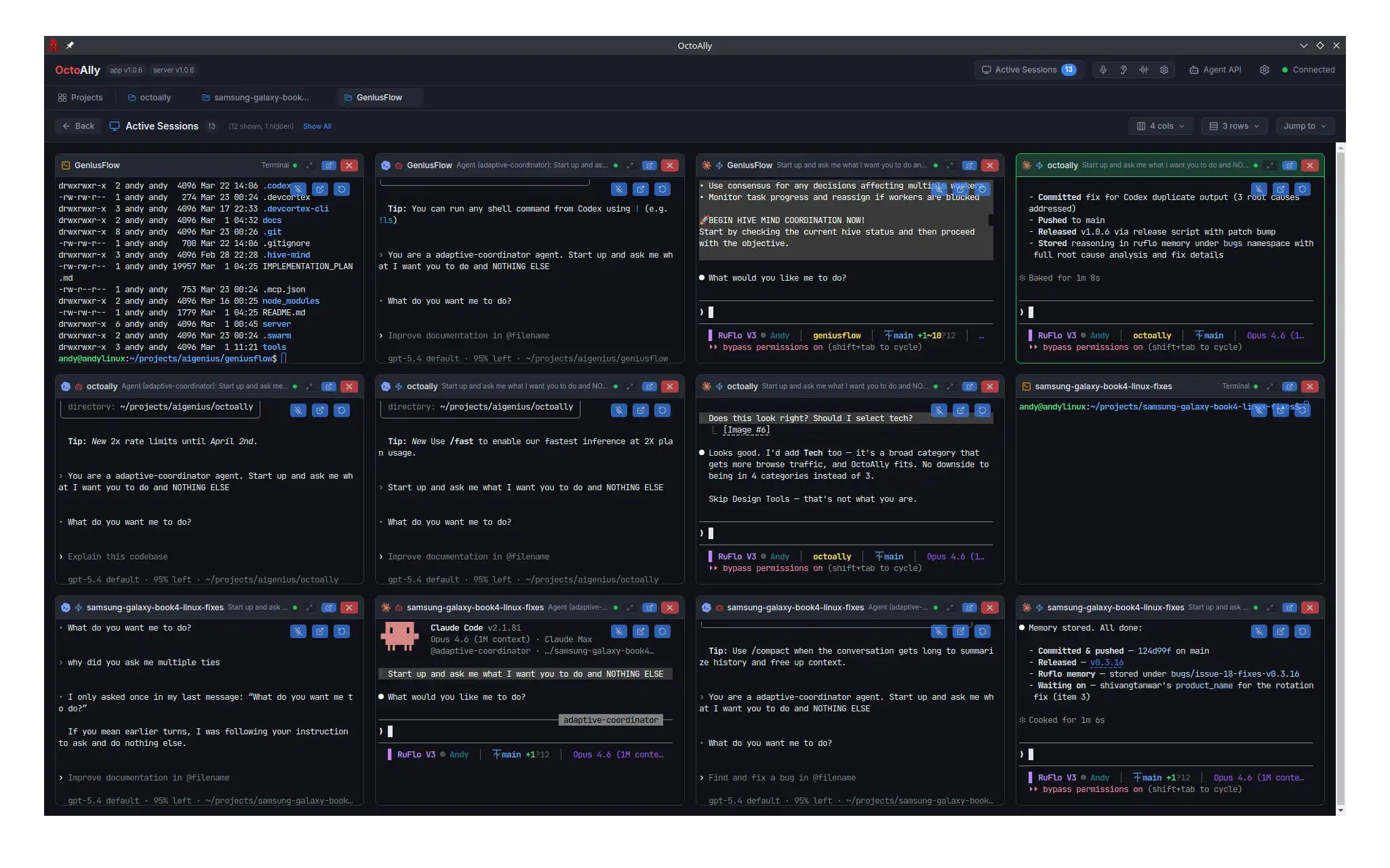
How OctoAlly Pro Is Putting AI Coding Agents on Autopilot with Kanban and Mobile Access
OctoAlly Pro adds a kanban board, automated multi-agent workflows, and full mobile access to AI coding agents like Claude Code and Codex, letting developers offload long-running tasks and stay connected from anywhere.
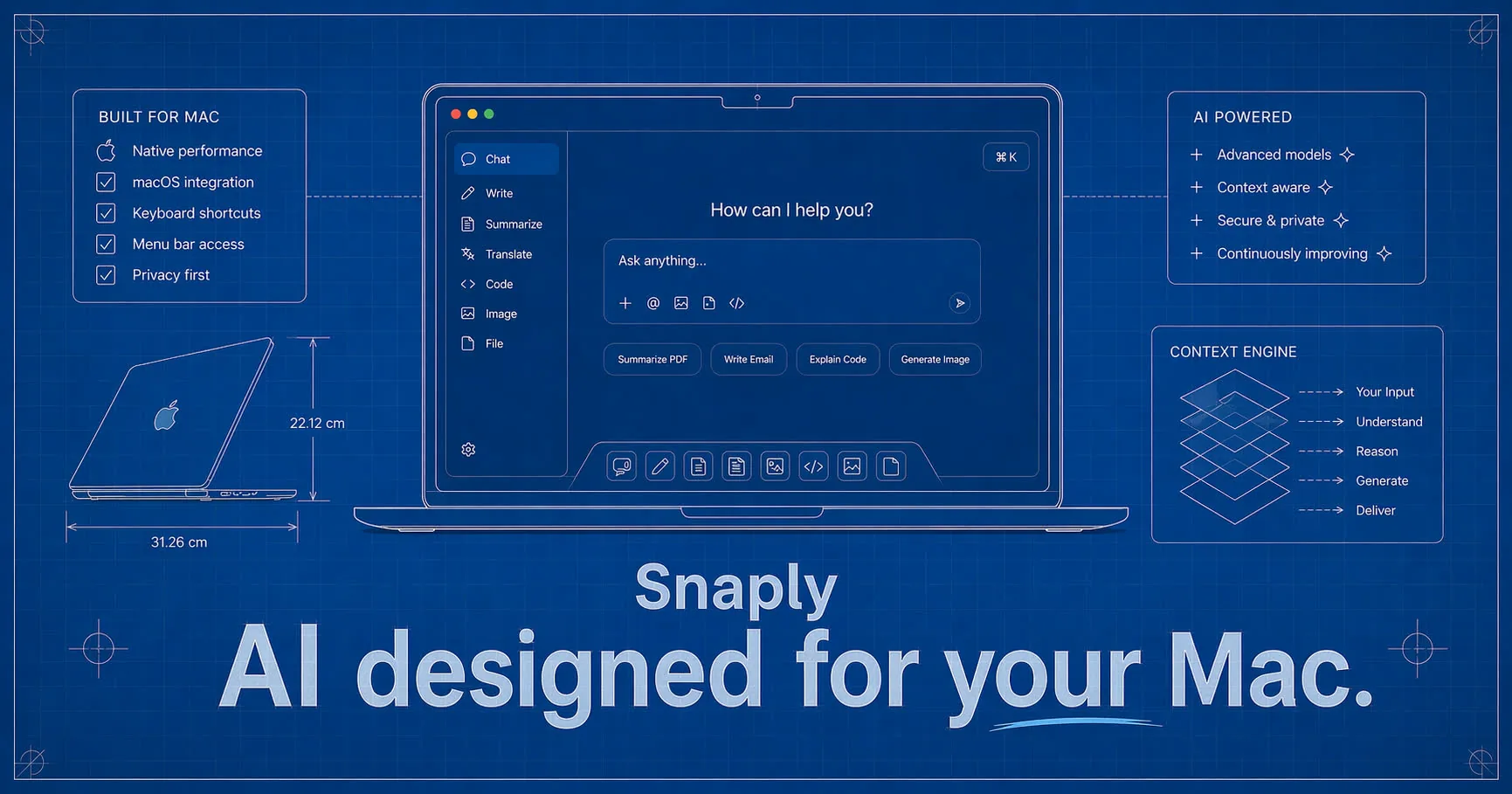
Snaply: The Mac-Native AI Assistant That Keeps Your Data Private While Boosting Productivity
Snaply is a free, on-device AI assistant for Mac that offers instant dictation, automatic meeting notes, and writing assistance across all your favorite apps, with a strong emphasis on privacy.