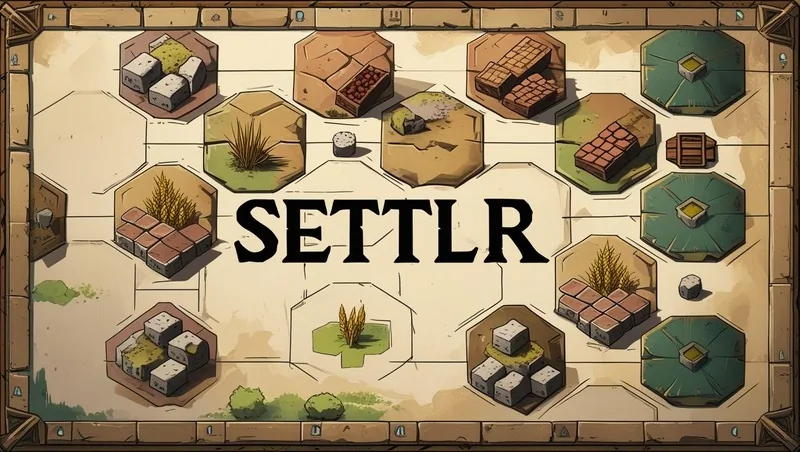
How Settlr Is Disrupting the Board Game Industry: A Free Catan Alternative with No Paywalls
Product Curation & Core Value
Settlr positions itself as a direct, uncompromising alternative to one of the most beloved board games of the modern era: Settlers of Catan. It is a completely free, browser-based multiplayer experience that replicates the core mechanics of Catan—building settlements, trading resources, and competing for points—without charging a cent. The product’s tagline, “A completely free Catan alternative with multiple expansions,” is refreshingly straightforward. It promises exactly what it delivers: no paywalls, no ads, and no download required.
At its heart, Settlr solves a fundamental friction point in the board gaming ecosystem. Catan, while iconic, carries a significant financial barrier. The base game retails for around $40, and its official expansions—Seafarers, Cities & Knights, Traders & Barbarians—can push the total cost well past $100. The official digital versions, such as those from Asmodee, often limit free play to a handful of scenarios or require in-app purchases for full access. Settlr bypasses this entirely. By offering the game in a browser, it removes the cost of entry and the friction of installation. Anyone with a modern browser and an internet connection can jump into a game within seconds.
The feature set is deliberately aligned with what Catan fans expect. Players can build settlements and cities, trade resources like grain, ore, wood, brick, and wool, and compete to be the first to reach a target victory point total. The inclusion of multiple expansions is a significant differentiator. While the base game is fun, the expansions add layers of strategic depth—naval exploration in Seafarers, city improvements and barbarian attacks in Cities & Knights. Settlr appears to offer these expansions without any additional cost, a move that undercuts the official Catan digital offerings where expansions are often sold as separate DLC.
The user experience is designed for speed and accessibility. The website emphasizes “guest play” and “streamlined game setup flow.” This means you don’t need to create an account to play. You can invite friends via a simple link, and the game starts quickly. This is a sharp contrast to many online board game platforms that require account registration, email verification, and sometimes even a subscription. Settlr’s approach is frictionless: share a link, wait for players to join, and start building.
However, there are trade-offs. The game is a clone, and it operates in a legal gray area. Catan’s mechanics are protected by copyright and trademark. While game mechanics themselves are not copyrightable, the specific implementation, art, and naming conventions are. Settlr uses a different art style (as seen in its icons for settlements, cities, and resource symbols like wheat, stone, and trees) to avoid direct infringement. But the core loop is unmistakably Catan. This limits its potential for mainstream adoption. It cannot be marketed on platforms like the Apple App Store or Google Play without facing takedown notices. It lives on the open web, relying on word-of-mouth and its Discord community.
Technical Implementation & Strategy
Settlr is built as a modern web application. The website is constructed using Next.js, a React-based framework, which is evident from the image URLs (e.g., _next/image?url=...). This choice is strategic. Next.js provides server-side rendering, which improves initial load times and SEO. It also enables image optimization, ensuring that the game assets—banners, board backgrounds, icons—load quickly even on slower connections.
The game itself is likely built using a combination of WebSockets for real-time multiplayer communication and a game engine written in JavaScript or TypeScript. The browser-based approach eliminates the need for a native app. This is both a strength and a limitation. On the positive side, it means zero installation, cross-platform compatibility (Windows, Mac, Linux, ChromeOS), and instant updates. The developer can push changes without users needing to download a new version. On the negative side, browser-based games can struggle with performance for complex animations or large numbers of players. Settlr’s focus on “smoother animations” suggests the team has invested in optimizing the rendering pipeline, possibly using Canvas or WebGL for the game board.
The distribution strategy is entirely organic and community-driven. There is no evidence of paid advertising or app store presence. The primary acquisition channel is the website itself, which is promoted through social media, forums like Reddit (specifically r/Catan and r/boardgames), and the Discord server. The Discord community serves as a feedback loop and a retention mechanism. Players can report bugs, suggest features, and find opponents. This is a classic lean startup approach: build a minimal viable product, get it in front of a passionate community, iterate based on feedback, and rely on virality.
The technical architecture also has implications for scalability. A browser-based multiplayer game requires a server that can handle concurrent game sessions. If Settlr gains traction, the developer will need to scale server capacity. The current implementation likely uses a single server or a small cluster. The cost of hosting is presumably covered by the developer’s own funds or donations, as there are no ads or paywalls. This raises questions about long-term sustainability. Without a revenue model, the project could be abandoned if the developer loses interest or can no longer afford server costs.
One notable technical detail is the use of a custom domain: playsettlr.com. The “play” prefix is a common convention for game websites (e.g., playchess.com, play.spotify.com). It signals that the site is interactive, not just informational. However, the domain is slightly less intuitive than a simpler alternative like settlr.com or settlrgame.com. The developer likely chose playsettlr.com because settlr.com was already taken or too expensive to acquire. This is a common compromise for startups with limited budgets.
Competitor Landscape & Industry Impact
The market for online Catan alternatives is surprisingly crowded. Several projects have attempted to fill the same niche, each with its own trade-offs. The most well-known is Colonist.io, a browser-based Catan clone that has been around since 2020. Colonist.io offers a similar value proposition: free, no download, multiple expansions. It has a large user base, a polished interface, and even a ranked matchmaking system. Settlr’s main differentiator is its emphasis on “guest play” and “streamlined setup.” Colonist.io requires account creation to play ranked games, though it does offer guest play for casual matches. Settlr removes even that friction.
Another competitor is Catan Universe, the official digital version published by Asmodee. Catan Universe is available on Steam, iOS, and Android. It offers the most polished experience, with official art and animations. However, it is monetized aggressively. The base game is free, but expansions and cosmetic items cost money. The user interface is also clunky compared to modern web apps. Catan Universe’s advantage is legitimacy—it is the official product, so there is no legal risk. Its disadvantage is cost and friction.
Board Game Arena (BGA) is another platform that hosts Catan (under a licensing agreement). BGA offers a subscription model for premium access, but free users can still join games. The experience is slower and less visually appealing than dedicated clones, but it has the advantage of a large, active community and official licensing.
Settlr’s impact on the industry is modest but meaningful. It represents a broader trend of indie developers creating free, browser-based alternatives to expensive or gatekept games. This democratizes access to board gaming. A student in a developing country who cannot afford a $40 board game can now experience the strategic depth of Catan for free. It also puts pressure on official publishers to reconsider their pricing and monetization strategies. If enough players flock to free clones, publishers may be forced to lower prices or offer more generous free tiers.
The trade-offs are clear. Settlr lacks the polish, reliability, and longevity of official products. It has no customer support, no guarantee of uptime, and no legal protection. If the developer receives a cease-and-desist letter from Asmodee, the project could disappear overnight. This is a high-risk, high-reward strategy. The developer is betting that the legal risk is low (since Catan’s mechanics are not copyrightable) and that the community will sustain the project through word-of-mouth.
Brand Naming & Domain Identity Analysis
The name “Settlr” is a clever portmanteau of “settler” and “settle.” It directly references the core action of the game: players build settlements on a hexagonal board. It is short, memorable, and easy to spell. The dropped “e” in “settler” gives it a modern, tech-forward feel, similar to brands like Tumblr or Flickr. It also creates a unique sound that is distinct from “Catan” while still evoking the same genre.
However, the name has limitations. It does not convey that the game is free or online. A user hearing “Settlr” for the first time might assume it is a mobile app or a subscription service. The tagline (“A completely free Catan alternative with multiple expansions”) does the heavy lifting of clarifying the value proposition. But in a crowded market, the name alone is not enough to attract new users. It relies heavily on context—seeing the tagline, the website, or a social media post.
The domain choice is playsettlr.com. This is a strategic compromise. The ideal domain would be settlr.com, but that is likely taken or priced out of reach. The “play” prefix is a standard convention for game websites, but it adds three extra characters and a syllable. It also creates a slight cognitive dissonance: the brand is “Settlr,” but the domain is “playsettlr.” Users might type “settlr.com” out of habit and land on a different site. This is a common problem for startups that cannot secure their exact brand match domain.
From the perspective of the three pillars—AI Domain Naming, TLD Intelligence, and Startup Naming Playbook—Settlr’s brand identity is mixed. On the positive side, the name is short and brandable, which aligns with the Startup Naming Playbook’s recommendation for names under 8 characters. It is also a portmanteau, which is a proven naming technique for tech startups. On the negative side, the domain uses a .com TLD but with a prefix, which dilutes the brand’s memorability. A more modern approach would be to use a .game or .io TLD (e.g., settlr.game or settlr.io). These TLDs are shorter and more directly tied to the gaming industry. However, .com still carries the highest trust and recognition, so the developer’s choice is understandable.
The domain also lacks an AI-driven naming strategy. There is no evidence that the name was generated using AI tools or that it was tested for memorability or searchability. The name “Settlr” is intuitive for Catan fans but opaque for general audiences. This is a missed opportunity. A more descriptive name like “FreeCatan” or “CatanOnline” would have been more immediately clear but would also risk trademark infringement. The developer chose brandability over clarity, which is a defensible trade-off.
Growth & Future Outlook
Settlr is currently in its early growth phase. The website is live, and the Discord community is active, but there are no publicly available metrics for user count or engagement. The project’s growth trajectory depends on several factors: legal risk, community engagement, and feature development.
The most immediate threat is legal action from Asmodee or its parent company, Embracer Group. Catan is a highly profitable franchise, and its owners have a history of protecting their intellectual property. In 2021, Asmodee sent cease-and-desist letters to several Catan clones, including Colonist.io. Colonist.io survived by rebranding and modifying its game to avoid direct infringement. Settlr may face a similar challenge. If the developer receives a legal threat, they will need to either shut down, rebrand, or modify the game to be more distinct from Catan. This could involve changing the resource names, the board layout, or the victory conditions.
Assuming the legal risk is managed, Settlr’s growth will depend on community engagement. The Discord server is a critical asset. It allows the developer to communicate directly with players, gather feedback, and build a loyal user base. The developer should consider adding features that Colonist.io lacks, such as custom board generation, house rules, or tournament support. These features would differentiate Settlr and give players a reason to choose it over the more established competitor.
Monetization is the elephant in the room. The developer has committed to “no ads, no paywalls.” This is a strong selling point, but it is not sustainable in the long term. Server costs, domain renewal, and development time all have real expenses. The developer could introduce optional donations, cosmetic microtransactions (e.g., custom board skins, avatar icons), or a “premium” tier that offers early access to new expansions. These monetization methods would not break the “no paywalls” promise if they are purely optional and do not affect gameplay.
The future outlook is cautiously optimistic. Settlr has a clear value proposition, a technically competent implementation, and a passionate target audience. If the developer can navigate the legal landscape and build a sustainable community, Settlr could become a staple for budget-conscious board gamers. However, the project’s success is far from guaranteed. It faces entrenched competitors, legal risks, and the inherent challenge of maintaining a free service. For now, it is a promising experiment in democratizing board gaming—one settlement at a time.
Related
How Vicket Is Redefining Customer Support: A White-Label, Multi-Tenant Platform for SaaS and Agencies
Vicket offers a white-label, multi-tenant customer support platform that integrates in minutes, with no per-agent fees. Ideal for SaaS founders and agencies, it provides branded portals, ticket management, and automated workflows from a single dashboard.

ClearNights: The Ultimate Stargazing Forecast Tool That Combines 5 Factors Into One Score
ClearNights provides hour-by-hour stargazing forecasts for over 50,000 cities, combining seeing, clouds, moon, and twilight into a single 0–100 score. It also notifies users of celestial events like meteor showers and eclipses.
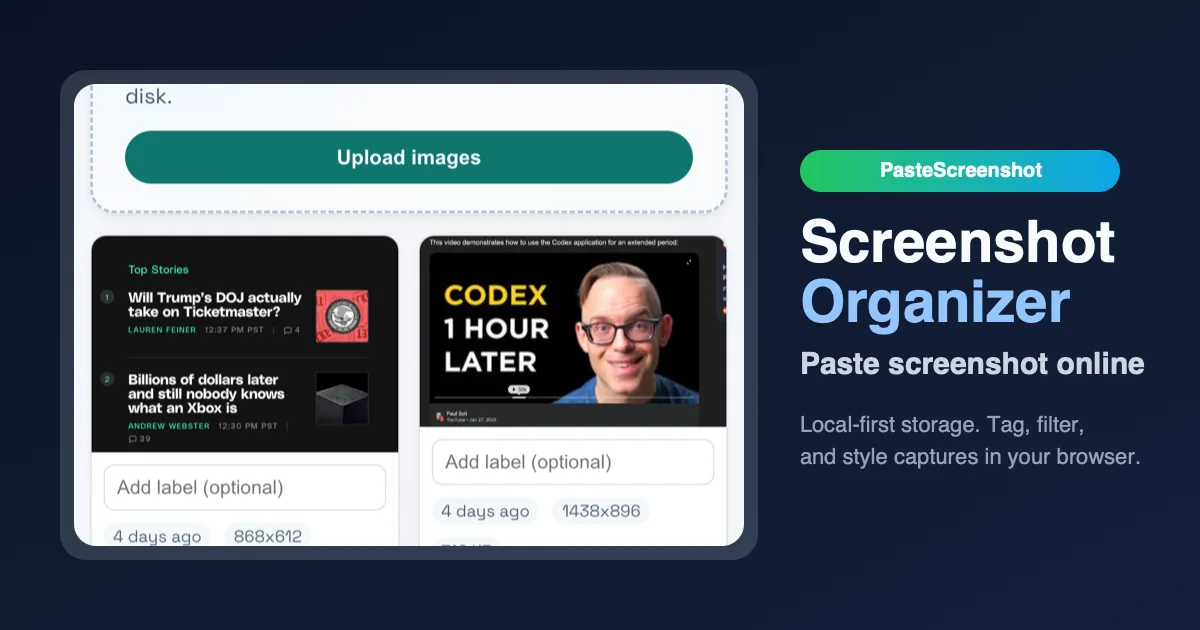
PasteScreenshot: A Local-First Screenshot Organizer for Privacy-Conscious Users
PasteScreenshot is a browser-based, local-first screenshot organizer that lets you paste, store, and manage screenshots without uploading to any server. Ideal for developers and designers seeking a private, clutter-free workspace.