How Tailscale Is Redefining Zero Trust Connectivity for the AI Era: A Branding & Tech Analysis
Product Curation & Core Value
For decades, the standard solution for secure remote access was the VPN—a technology that worked reasonably well when employees sat in an office and connected from home, but has aged poorly in the era of multi-cloud infrastructure, edge computing, and AI workloads. Tailscale aims to put that legacy model out to pasture, replacing it with a Zero Trust identity-based connectivity platform that treats every device, user, and service as a distinct entity requiring explicit permission.
The core problem Tailscale solves is elegantly simple: secure connectivity is too hard. Traditional VPNs require complex firewall rules, bastion hosts, public IP exposure, and ongoing maintenance headaches. They often grant broad network access rather than least-privilege access, creating security gaps that attackers love to exploit. Tailscale flips this model on its head by building a wireguard-based mesh overlay network that connects devices directly, peer-to-peer, without any central VPN concentrator. Every connection is identity-based and encrypted end-to-end.
The platform's feature set is comprehensive but intentionally modular. Its Business VPN capability gives remote teams secure internal access to apps and data from anywhere, without the performance bottlenecks of traditional VPN concentrators. The Privileged Access Management (PAM) features provide auditable access to SSH, Kubernetes clusters, databases, and other sensitive infrastructure—replacing tools like bastion hosts and jump boxes that are notoriously difficult to secure and maintain. Tailscale also offers direct infrastructure access without requiring public exposure, which is a significant win for organizations running sensitive workloads in private subnets or on-premises environments.
Perhaps the most interesting recent addition is Aperture, a feature set designed specifically for securing AI usage. Aperture addresses the growing problem of shadow AI—employees using unauthorized AI tools with corporate data, creating data leakage risks that most organizations are only beginning to understand. The feature provides visibility into which AI tools employees are accessing, controls over corporate data exposure to those tools, and management capabilities for AI agents that might be interacting with internal systems. This positions Tailscale at the intersection of network security and AI governance, a space that is likely to grow rapidly as enterprises adopt more AI tools.
The numbers from existing customers tell a compelling story. Instacart saw a 90% reduction in internal support requests after deploying Tailscale. Corelight saved over 1,000 hours on connectivity issues. Cribl managed 25x headcount growth without needing dedicated IT resources for configuration or onboarding. These aren't marginal improvements; they represent fundamental shifts in how organizations think about network security operations.
Technical Implementation & Strategy
Under the hood, Tailscale's architecture is where the real magic happens. The platform is built on WireGuard, a modern VPN protocol that is significantly faster and more auditable than older protocols like OpenVPN or IPsec. But Tailscale isn't just a WireGuard wrapper—it's a control plane that orchestrates WireGuard connections at scale, handling the complexity of NAT traversal, key management, and policy enforcement that would otherwise be a nightmare to manage manually.
The mesh networking approach is the key differentiator. Instead of routing all traffic through a central VPN server (which creates bottlenecks and single points of failure), Tailscale establishes direct peer-to-peer connections between devices using techniques like UDP hole punching and relay servers (DERPs) when direct connections aren't possible. This means that a developer in Tokyo connecting to a server in Frankfurt doesn't have to bounce through a VPN server in Virginia—the connection goes directly, with lower latency and better throughput.
Identity is the foundation of Tailscale's security model. Every device and user is authenticated through an identity provider (Google Workspace, Microsoft Entra ID, Okta, or Tailscale's own authentication), and access policies are defined in terms of these identities rather than IP addresses or network segments. This is a fundamentally different approach from traditional network security, which often relies on VLANs and firewall rules that are brittle and difficult to audit. With Tailscale, you can say "developers can SSH into staging servers but not production," and the platform enforces that policy regardless of where the developer or server is located.
The platform's distribution strategy is worth examining. Tailscale offers a generous free tier for personal use and small teams, which has been instrumental in building a grassroots developer following. The free tier limits you to three users and up to 100 devices, which is enough for many small teams to get started without any financial commitment. This freemium model creates a natural upgrade path: as organizations grow and need more users, advanced features like ACLs, node sharing, and Aperture, they move to paid plans. It's a classic land-and-expand strategy that has worked well for companies like Slack and GitHub.
The technical supply chain is relatively lean. Tailscale is built primarily in Go, which is well-suited for network programming and cross-platform compilation. The client software runs on virtually every platform—Windows, macOS, Linux, iOS, Android, and even routers and embedded devices. The control plane runs on Tailscale's infrastructure, but the data plane is entirely peer-to-peer, meaning Tailscale doesn't see your traffic. This architecture is both a technical advantage and a trust signal: organizations that are sensitive about data sovereignty can use Tailscale without worrying about their traffic passing through a third-party cloud.
Competitor Landscape & Industry Impact
The network security market is crowded and dominated by incumbents with deep pockets. Cisco's AnyConnect, Palo Alto Networks' GlobalProtect, and Zscaler's ZPA are the traditional heavyweights, each with years of enterprise trust and complex feature sets. But these solutions come with significant baggage: they are expensive, difficult to deploy, and often require dedicated hardware or virtual appliances. They also tend to be inflexible, forcing organizations to adapt their workflows to the VPN rather than the other way around.
On the lighter end of the spectrum, there are solutions like ZeroTier, Netmaker, and OpenVPN Cloud. ZeroTier is probably the closest direct competitor to Tailscale, offering a similar mesh networking approach with identity-based access. However, Tailscale has pulled ahead in terms of ease of use, integrations with identity providers, and the polish of its user experience. Netmaker is open-source and more customizable but lacks the enterprise features and support that Tailscale offers. OpenVPN Cloud is simpler than traditional OpenVPN but still carries the architectural baggage of a client-server model.
The emergence of AI-specific security features gives Tailscale a unique position. While competitors like Zscaler and Netskope have AI security offerings, they tend to be bolted on to existing SASE platforms rather than built from the ground up for AI workloads. Aperture's focus on shadow AI detection and AI agent management is timely, as more organizations realize that their employees are using tools like ChatGPT, Claude, and GitHub Copilot with corporate data, often without IT's knowledge or approval. Tailscale's ability to provide visibility into this usage, combined with controls to prevent data leakage, is a significant differentiator.
The trade-offs are worth considering. Tailscale's reliance on a centralized control plane means that if Tailscale's servers go down, you cannot make changes to your network configuration, though existing connections continue to work since they are peer-to-peer. This is a potential single point of failure that enterprise buyers should evaluate. Additionally, while Tailscale is excellent for connecting devices and services, it is not a full SASE solution—it doesn't include a cloud access security broker (CASB), data loss prevention (DLP), or web filtering capabilities that some organizations require. Organizations needing a comprehensive security stack may need to layer Tailscale with other tools.
The industry impact is already visible. Tailscale has forced traditional VPN vendors to reconsider their approach, with many now offering "Zero Trust" features that mimic Tailscale's identity-based model. The company's developer-friendly approach has also raised the bar for user experience in network security, an area that has historically been neglected in favor of feature bloat and administrative complexity. The fact that companies like Microsoft and Nvidia use Tailscale internally is a strong signal that even the largest organizations see value in a more modern approach to connectivity.
Brand Naming & Domain Identity Analysis
The name "Tailscale" is a masterclass in startup naming. It's short, memorable, and evocative without being literal. The "Tail" prefix suggests something that follows, adapts, and is lightweight—like an animal's tail that moves naturally with the body. The "scale" suffix implies the ability to grow and handle increasing demands. Together, they create a mental image of a flexible, adaptive system that can grow with your organization. This is a far cry from the sterile, acronym-heavy names that dominate the network security space (VPN, SASE, PAM, ZTNA).
From an AI Domain Naming perspective, Tailscale's name is interesting. While the company has recently leaned into AI with its Aperture features, the name itself is not explicitly AI-focused. This is actually a smart move: it allows the brand to evolve without being pigeonholed. A name like "AITail" or "NeuralConnect" would have dated poorly as AI trends shift. Instead, "Tailscale" is broad enough to encompass AI security without being limited to it.
The domain tailscale.com is a textbook example of good domain selection. It uses the .com TLD, which remains the gold standard for global brands. The domain is the exact match for the brand name, which eliminates confusion and makes it easy for users to find the company. There is no need for hyphens, numbers, or creative spelling. The domain is also relatively short at 9 characters, making it easy to type and remember.
In terms of TLD Intelligence, Tailscale made the right call with .com. While there has been a proliferation of new TLDs like .io, .app, and .dev, .com still carries the most trust and recognition. For a security company, trust is paramount. A .com domain signals stability and longevity, which is important when you're asking organizations to entrust their network traffic to your platform. A .io or .dev domain might have been more fashionable, but it would have lacked the same level of authority.
The Startup Naming Playbook offers several lessons from Tailscale. First, the name is distinctive enough to be memorable but not so unusual that it's hard to spell or pronounce. Second, it avoids the trap of being too descriptive—"Tailscale" doesn't literally describe what the product does, which allows for brand expansion. Third, the name has a friendly, approachable feel that contrasts with the intimidating nature of network security, making it more appealing to developers and IT teams who are tired of complex, enterprise-grade tools.
The visual identity reinforces the name effectively. The tail logo is simple, playful, and recognizable. The color palette is modern and clean, with a focus on blues and whites that convey trust and professionalism. The tagline "The best secure connectivity platform for the AI era" is well-crafted, positioning the product for current trends without overpromising. It's worth noting that the tagline has evolved over time—earlier versions focused more on "Zero Trust" and "modern VPN," reflecting the company's strategic pivot toward AI security.
Growth & Future Outlook
Tailscale's growth trajectory is strong, with over 30,000 businesses using the platform and a Series C funding round behind it. The customer list reads like a who's who of modern tech: Microsoft, Nvidia, Duolingo, Hugging Face, Mistral AI, Cohere. These are not just logos for a website; they are active users who provide real testimonials and case studies. This level of enterprise adoption at a relatively early stage is a positive signal for future growth.
The expansion into AI security with Aperture is well-timed. The shadow AI problem is only going to get worse as more employees adopt AI tools for their daily work. Gartner predicts that by 2026, 80% of enterprises will have deployed generative AI APIs in production environments, up from less than 5% in 2023. This creates a massive need for the kind of visibility and control that Aperture provides. Tailscale is well-positioned to capture this market, especially given its existing relationships with AI-forward companies like Hugging Face and Mistral AI.
However, there are risks. The network security market is highly competitive, and the incumbents are not standing still. Cisco, Palo Alto, and Zscaler are all investing heavily in AI security features. Tailscale's advantage is its developer-friendly approach and ease of use, but as competitors improve their user experience, that advantage may erode. The company will need to continue innovating to stay ahead.
Another potential challenge is the "build vs. buy" decision that enterprises face. Some organizations may prefer to assemble their own security stack using open-source components like WireGuard, Keycloak, and custom scripts. Tailscale's value proposition is that it saves time and reduces complexity, but for organizations with strong in-house security teams, the DIY approach may still be appealing. Tailscale needs to continue demonstrating that the convenience and reliability of its platform outweigh the cost.
Looking ahead, I expect Tailscale to expand in several directions. First, deeper integration with AI development workflows—automatic detection of AI agents, policies for AI tool access, and audit logs for AI interactions. Second, expansion into edge computing and IoT, where the mesh networking model is particularly well-suited for managing large fleets of devices. Third, continued investment in the developer experience, including better CLI tools, API improvements, and integrations with CI/CD pipelines.
The company's recent event, TailscaleUp in San Francisco, signals a commitment to building community and evangelizing its approach. This is smart—many of the most successful developer tools companies (HashiCorp, Datadog, GitHub) have built strong communities around their products. Tailscale is following the same playbook, and it's working.
In the final analysis, Tailscale is a rare example of a company that has taken a boring category—network security—and made it genuinely interesting. The product is well-designed, the naming is thoughtful, and the strategic pivot into AI security is timely. The company faces real competition and challenges, but its trajectory suggests it will be a significant player in the connectivity space for years to come. For any organization still wrestling with legacy VPNs and wondering if there's a better way, Tailscale offers a compelling answer.
Related
How Vicket Is Redefining Customer Support: A White-Label, Multi-Tenant Platform for SaaS and Agencies
Vicket offers a white-label, multi-tenant customer support platform that integrates in minutes, with no per-agent fees. Ideal for SaaS founders and agencies, it provides branded portals, ticket management, and automated workflows from a single dashboard.

ClearNights: The Ultimate Stargazing Forecast Tool That Combines 5 Factors Into One Score
ClearNights provides hour-by-hour stargazing forecasts for over 50,000 cities, combining seeing, clouds, moon, and twilight into a single 0–100 score. It also notifies users of celestial events like meteor showers and eclipses.
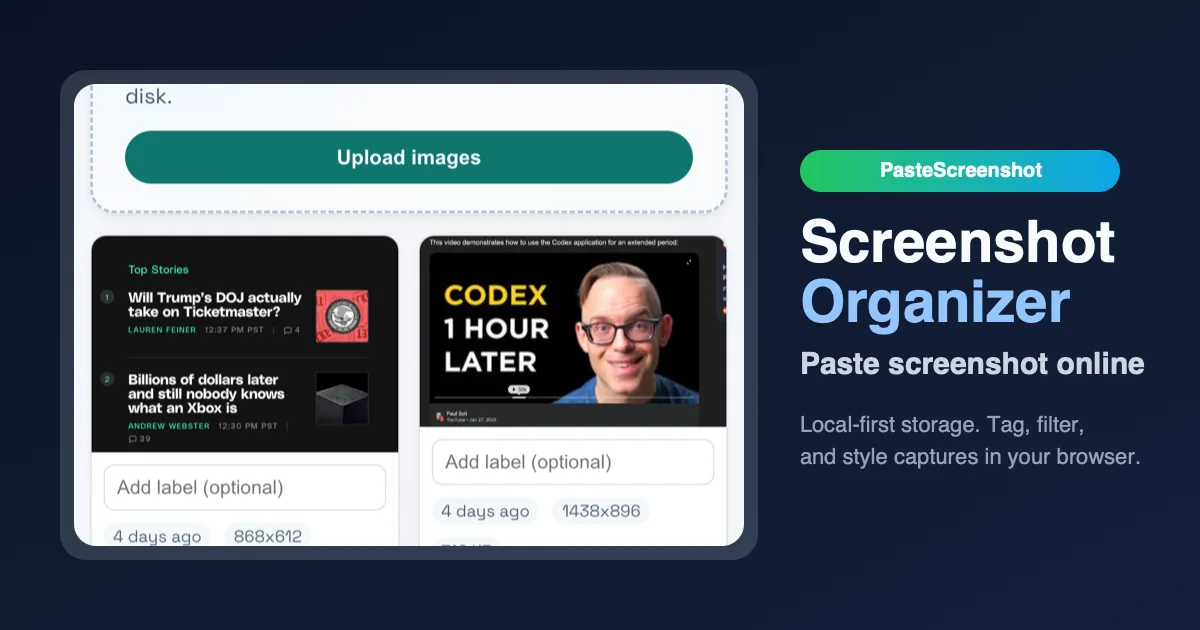
PasteScreenshot: A Local-First Screenshot Organizer for Privacy-Conscious Users
PasteScreenshot is a browser-based, local-first screenshot organizer that lets you paste, store, and manage screenshots without uploading to any server. Ideal for developers and designers seeking a private, clutter-free workspace.