How Autonomique Is Bringing Physical AI to Industrial Automation That Actually Works
The Robot That Doesn't Need a Backflip
The industrial robotics industry has a showmanship problem. For years, the public imagination has been captured by robots dancing, flipping, and opening doors in carefully staged demonstrations. These viral moments are impressive, but they rarely translate to the factory floor. A robot that can backflip is a marvel of engineering. A robot that can reliably insert a connector into a PCB board, handle a slightly warped piece of metal, or adapt to a new product line in hours instead of months — that is a business necessity.
Autonomique, a Seed-stage startup based in Montréal and Menlo Park, is building the latter. Founded by Vikrant Tomar, the company has developed a physical AI system that gives industrial robots the ability to reason, plan, and manipulate objects with high dexterity in real-world conditions. The company’s tagline — “Physical AI that actually works” — is a direct challenge to the flashy demos that have dominated headlines. It is a pragmatic, almost defiant, statement of intent.
The startup has already deployed its technology at an F&P Manufacturing plant in Ontario, as reported by BetaKit. This is not a lab experiment. It is a live production environment. And it is here, in the messy, variable, high-stakes world of industrial manufacturing, that Autonomique’s value proposition will be tested.
Product Curation & Core Value
Autonomique’s core offering is an AI layer that sits on top of existing robotic hardware. The company does not build robots. Instead, it builds the intelligence that makes them useful. The system enables robots to perform multi-task workflows with high accuracy, handle variations on the production line, and adapt to new tasks without extensive reprogramming.
The problem Autonomique solves is deeply embedded in the history of industrial automation. Traditional industrial robots are rigid. They excel at doing the same task, in the same position, with the same parts, millions of times. This works well for high-volume, low-mix production — think automotive assembly lines that produce the same car model for years. But modern manufacturing is shifting toward high-mix, low-volume production, where flexibility is paramount. A factory might need to produce dozens of different product variants in a single day, each with slightly different parts and assembly requirements. Traditional robots cannot handle this. They require weeks or months of reconfiguration, reprogramming, and testing.
Autonomique’s physical AI addresses this gap. The system allows robots to perceive their environment, reason about what they see, and adapt their actions accordingly. If a part is slightly misaligned on the conveyor belt, a traditional robot might fumble it or jam. An Autonomique-powered robot can adjust its grip in real time. If a product design changes, the system can be retrained in hours, not weeks.
The company’s value proposition is built on three pillars. First, industrial-grade autonomy: the system performs multi-task workflows with the speed, repeatability, and reliability required for actual production demands. Second, versatility: it is easily deployable across diverse tasks and can adapt to variations quickly. Third, edge-native architecture: all inference happens on-device, with clear integration hooks into operational technology (OT), information technology (IT), and manufacturing execution systems (MSE). This last point is critical for industrial adoption, where latency, security, and reliability are non-negotiable.
Autonomique targets four primary industries. In the automotive supply chain, the system handles multi-part assembly, kitting, and in-line quality checks. In general manufacturing, it enables rapid reconfiguration of workcells for high-mix, low-volume production. In aerospace, it provides precision, traceable robotics for mission-critical assembly in regulated environments. In electronics assembly, it performs fine-grained manipulation for PCB assembly, connector insertion, and high-mix kitting.
Each of these sectors has unique requirements. Automotive suppliers need speed and reliability. Aerospace demands traceability and compliance. Electronics requires precision at scale. Autonomique’s system is designed to be adaptable across these domains, but the real test will be whether a single AI platform can truly serve such diverse needs without becoming a jack-of-all-trades, master of none.
Technical Implementation & Strategy
Autonomique’s technical approach is defined by a few key strategic decisions. First, the company has chosen to run inference on-device. This is a significant departure from many AI robotics companies that rely on cloud-based processing. On-device inference reduces latency, eliminates the need for constant internet connectivity, and addresses security concerns that are paramount in industrial environments. A factory cannot afford a robot that stops working because its cloud connection drops. Edge-native architecture ensures that the robot remains operational regardless of network conditions.
Second, the system is designed to integrate with existing industrial infrastructure. Autonomique provides clear hooks into OT, IT, and MSE stacks. This is not a standalone product that requires a complete overhaul of a factory’s technology stack. It is a layer that sits on top of existing systems, which lowers the barrier to adoption. Manufacturers can deploy Autonomique’s AI without ripping out their existing robots or control systems.
Third, the company’s focus on multi-task workflows sets it apart from many competitors. Most AI robotics systems are designed for a single task — picking and placing objects, for example. Autonomique’s system can handle a sequence of tasks within a single workflow, which is closer to what a human worker might do. This is technically challenging because it requires the AI to maintain context across multiple actions and adapt to changes in the environment between steps.
The company’s deployment at F&P Manufacturing in Ontario provides a concrete example of how this works in practice. F&P is a Tier 1 automotive supplier, which means it produces parts directly for automakers. The plant environment is demanding: high volumes, tight tolerances, and constant pressure to maintain quality. Autonomique’s system was deployed to handle tasks that previously required human dexterity, such as kitting and assembly of multi-part components. The results, according to the company, have been positive, though specific metrics have not been disclosed.
One of the most interesting technical challenges Autonomique faces is the variability of real-world manufacturing. A part that arrives on a conveyor belt may not be in exactly the same position every time. Lighting conditions can change. The part itself may have slight manufacturing variations. Traditional robots cannot handle this. Autonomique’s AI must perceive the environment, reason about what it sees, and adapt its actions in milliseconds. This is a hard problem, and it is the core of the company’s technical moat.
The company’s supply chain strategy is also worth noting. By building AI that works with existing robots, Autonomique avoids the capital-intensive business of manufacturing hardware. This is a common approach in the AI robotics space — companies like Covariant and Osaro have taken similar paths. But it also means Autonomique is dependent on the capabilities of third-party hardware. If a robot arm lacks the necessary precision or speed, no amount of AI can compensate. The company must carefully select its hardware partners and ensure its software is optimized for the robots it supports.
Competitor Landscape & Industry Impact
The physical AI and industrial robotics space is crowded and increasingly well-funded. Autonomique faces competition from several directions.
On one side are traditional robotics companies like FANUC, ABB, and KUKA, which have decades of experience in industrial automation. These companies are not standing still. They are investing heavily in AI and machine learning to make their robots more flexible. However, their legacy systems and business models are built around the old paradigm of rigid, high-volume automation. Adapting to a high-mix, low-volume world is a strategic challenge for them, not just a technical one.
On the other side are AI-native robotics startups like Covariant, Osaro, and Vicarious (now part of Alphabet’s Intrinsic). Covariant, in particular, has raised significant funding and built a strong reputation for AI-powered robotic picking. But Covariant’s focus has been primarily on warehouse and logistics applications, not the heavy industrial environments that Autonomique targets. Osaro focuses on similar applications but has a narrower product scope.
There are also companies like Veo Robotics, which is building safety systems to allow robots to work alongside humans, and Sarcos, which focuses on teleoperated and semi-autonomous robots for industrial use. Neither is a direct competitor, but they occupy adjacent spaces.
Autonomique’s differentiation lies in its focus on multi-task workflows and its emphasis on industrial-grade reliability. The company’s tagline — “Physical AI that actually works” — is a clear jab at competitors that have produced impressive demos but struggled to deploy in production environments. This is a smart positioning strategy. It acknowledges the skepticism that exists in the manufacturing industry, where many have seen AI robotics demos that failed to deliver in practice.
But there are trade-offs. By focusing on industrial applications, Autonomique is targeting a market that is notoriously conservative and slow to adopt new technology. Manufacturing companies are risk-averse. They cannot afford production downtime, and they demand rigorous proof of reliability before deploying new systems. Autonomique’s deployment at F&P Manufacturing is a strong signal, but it is just one data point. The company will need to build a track record of successful deployments across multiple industries to gain widespread trust.
Another challenge is the talent market. Physical AI is a highly specialized field that requires expertise in computer vision, reinforcement learning, control systems, and robotics. The competition for this talent is fierce, with deep-pocketed companies like Tesla, Amazon, and Google offering salaries that startups cannot match. Autonomique’s location in Montréal gives it access to a strong AI research ecosystem, but the company will need to offer compelling equity and mission-driven work to attract top talent.
The industry impact of Autonomique’s approach, if successful, could be significant. The ability to reconfigure workcells in hours instead of months would fundamentally change the economics of manufacturing. It would enable factories to produce a wider variety of products without the traditional cost penalties of high-mix, low-volume production. This could accelerate the trend toward reshoring, as manufacturers find it economically viable to produce smaller batches closer to their customers.
Brand Naming & Domain Identity Analysis
The name “Autonomique” is a carefully constructed blend of meaning and place. It combines “autonomous” with a French-sounding suffix, reflecting the company’s Montréal roots. The “-ique” ending is a direct nod to French, the dominant language of Quebec, where Autonomique is headquartered. This is not a subtle reference. The name tells you, before you read a single word of the company’s website, that this is a company with a French-Canadian identity.
The choice is strategic. Montréal has emerged as a major AI hub, thanks to institutions like Mila (the Quebec Artificial Intelligence Institute) and a concentration of AI talent. By embedding its location in its name, Autonomique signals its connection to this ecosystem. It also differentiates the company from the Silicon Valley-centric narrative that dominates the AI robotics space. Autonomique is not another Palo Alto startup. It is a Montreal company with a global ambition.
From a naming perspective, “Autonomique” has several strengths. It is distinctive. A quick search reveals no other significant company using this name. It is descriptive but not generic — it clearly conveys the concept of autonomy without being as bland as “Autonomous Robotics Inc.” It has a rhythmic, almost musical quality that makes it memorable. And it is short enough to be easily typed and spoken.
The domain — autonomique.ai — is an excellent choice. The .ai TLD is the gold standard for AI companies in 2026. It signals immediately that this is an AI-native company, not a traditional robotics firm that happens to use some AI. As discussed in The .ai TLD Boom: Why Everyone Wants an AI Domain, the .ai extension has become a powerful branding tool for companies that want to establish credibility in the AI space. Autonomique’s use of .ai is particularly apt because the company’s entire value proposition is based on AI — it is not a robotics company that uses AI, but an AI company that works through robots.
The domain is also clean and brandable. There are no hyphens, no numbers, no awkward spelling. The prefix “autonomique” is the full company name, which is ideal for brand recall. The URL is short enough to be easily communicated verbally, which matters in an industry where word-of-mouth and conference networking are important.
From a TLD intelligence perspective, the .ai choice is smart for another reason: it avoids the premium pricing and scarcity of .com domains. The exact-match .com — autonomique.com — would likely be either unavailable or prohibitively expensive for a Seed-stage startup. By choosing .ai, Autonomique gets a clean, memorable domain without the domain aftermarket costs that can drain startup budgets. This is a pragmatic decision that aligns with the company’s no-nonsense brand identity.
The tagline — “Physical AI that actually works” — is equally well-considered. It is direct, almost confrontational. It positions the company against the hype and promises that have plagued the robotics industry. It also subtly implies that competitors’ products do not actually work. This is a bold claim, and one that Autonomique will need to back up with consistent performance. But as a branding statement, it is effective. It cuts through the noise and tells potential customers exactly what to expect.
The brand identity as a whole is cohesive. The name suggests autonomy and French-Canadian roots. The domain reinforces the AI focus. The tagline promises reliability over hype. The website is clean and professional, with a focus on industrial applications rather than futuristic visions. Everything about the brand says: “We are serious about manufacturing. We are not here to impress investors with demos. We are here to solve real problems.”
Growth & Future Outlook
Autonomique is at a critical inflection point. The company has a working product, a live deployment, and a clear value proposition. But it is still a Seed-stage startup in a capital-intensive industry with well-established competitors. The next 12 to 24 months will determine whether the company can scale from a promising proof-of-concept to a viable business.
The immediate priority is expanding the customer base beyond the initial deployment at F&P Manufacturing. The company’s Strategic Partnership Program is
Related
Silkwave Voice: On-Device AI Transcription for macOS – Private, No Subscriptions
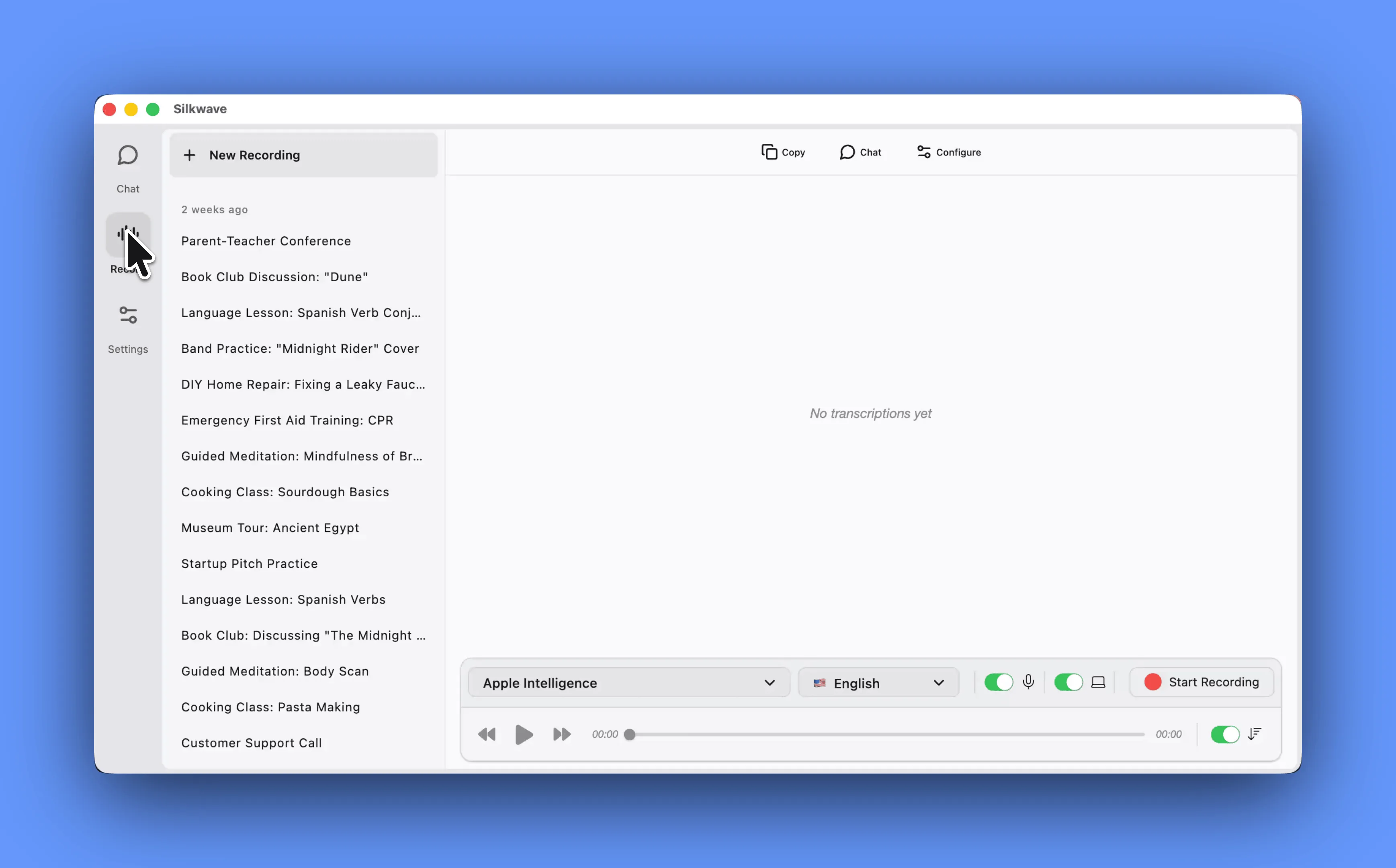
Silkwave Voice is a macOS app that records and transcribes meetings, lectures, and podcasts in 10+ languages using Apple's on-device models, with ChatGPT-powered summaries and AI chat—all processed locally for privacy.
How AISA Is Redefining AI Literacy: A 20-Minute Conversational Assessment That Certifies Your Skills
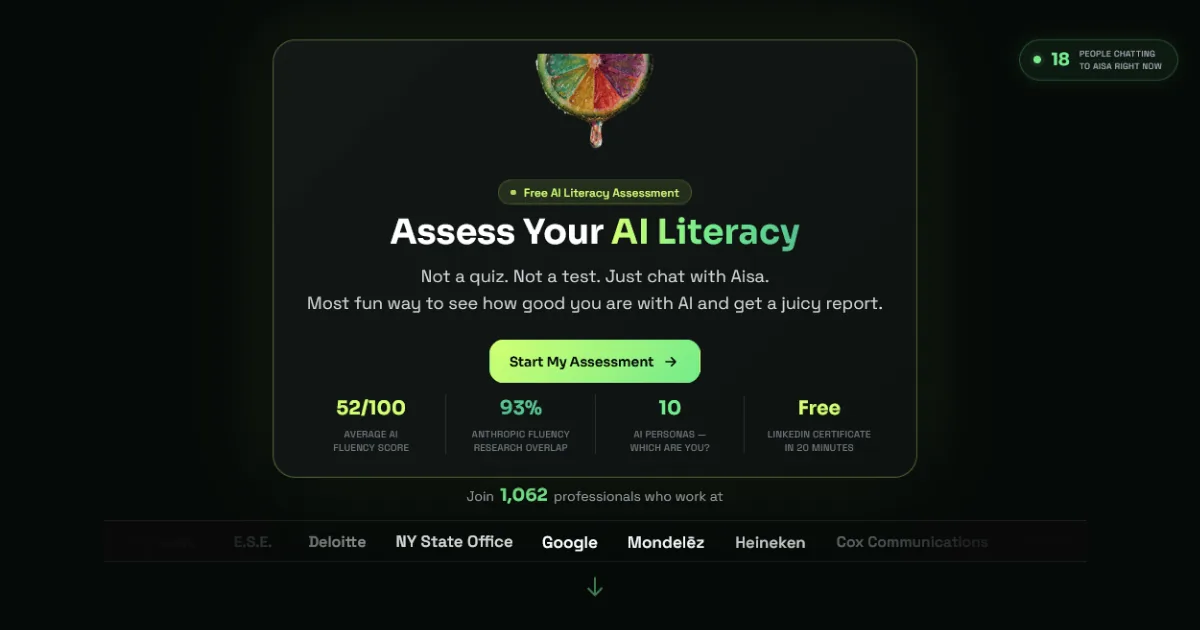
AISA offers a free, 20-minute conversational AI assessment that measures your AI fluency across five dimensions, provides a personalized AI persona and score, and issues a LinkedIn-ready certificate. Backed by research from Anthropic and the U.S. Department of Labor, it's the most fun way to benchmark and showcase your AI skills.
How Waabi Is Redefining Autonomous Transportation with a Single Physical AI Brain
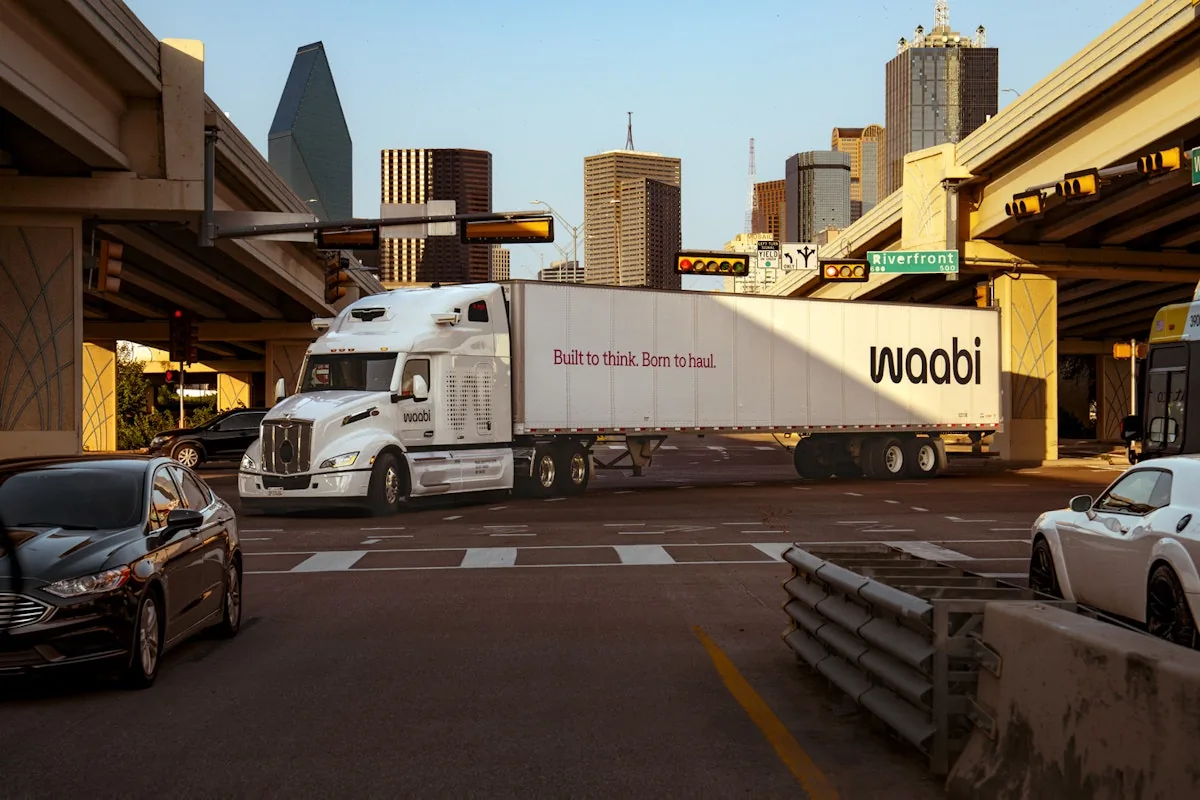
Waabi's revolutionary Physical AI platform uses a single, verifiable end-to-end model to power both autonomous trucks and robotaxis, promising safer, scalable, and more efficient transportation.