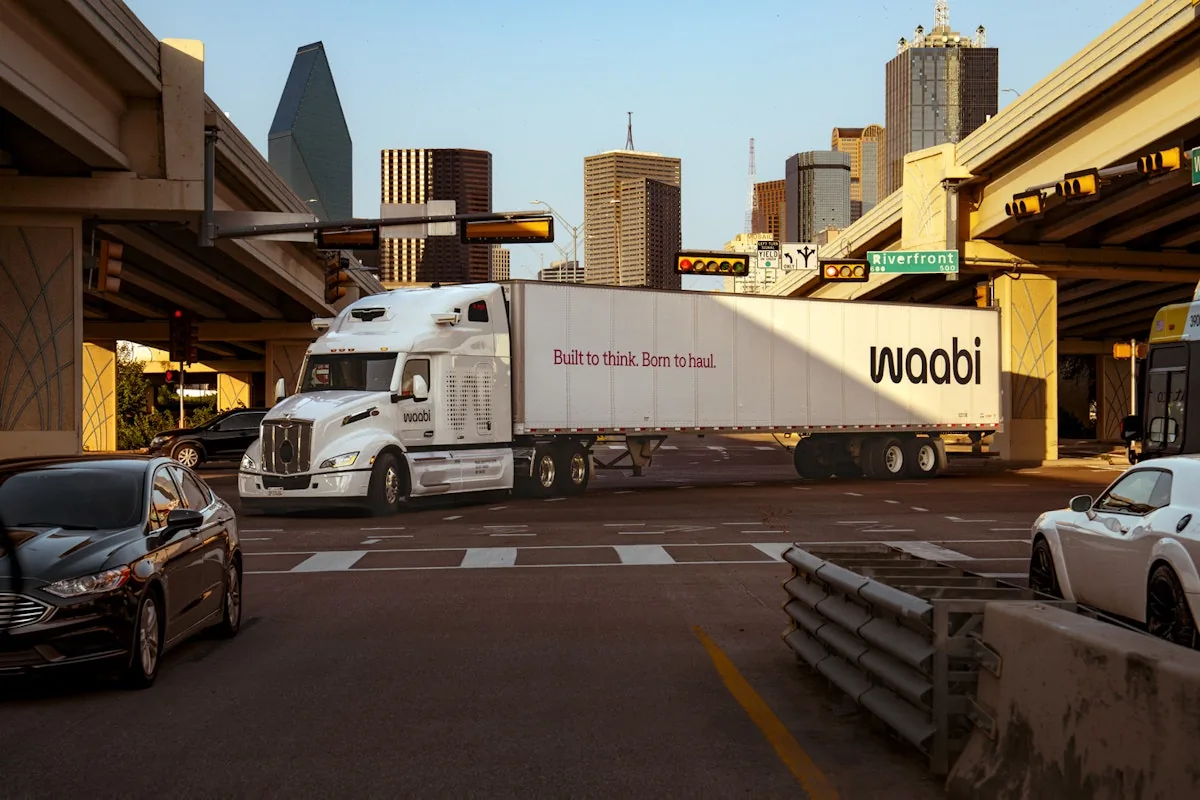
How Waabi Is Redefining Autonomous Transportation with a Single Physical AI Brain
The Waabi Wager: Can a Single Brain Drive the Future of Autonomous Trucking and Robotaxis?
The autonomous vehicle industry has long been a graveyard of grand promises and spectacular implosions. For years, the prevailing wisdom dictated a fragmented approach: separate teams, separate AI models, and separate sensor stacks for highway trucking versus urban robotaxis. This strategy, pursued by giants like Waymo and Cruise, has yielded impressive but geographically constrained results. It has also proven staggeringly expensive and slow to scale.
Enter Waabi, a Toronto-based startup that is betting on a radically different premise. Instead of building multiple specialized brains, Waabi is constructing a single, unified “Physical AI” platform—a shared, verifiable end-to-end model designed to power everything from an 18-wheeler hauling freight across Texas to a robotaxi navigating the streets of San Francisco. The company’s recent $1 billion funding round (announced in January 2026) signals that investors believe this unified approach might finally break the autonomous vehicle logjam. But does the technology live up to the hype, and can Waabi navigate a landscape littered with the wreckage of failed competitors?
Product Curation & Core Value
Waabi’s core offering is not a single vehicle but an entire operating system for autonomous transportation. The company’s flagship product is the Waabi Driver, an end-to-end AI system that acts as the central intelligence for multiple vehicle platforms. The key differentiator is its “generalization” capability. Rather than training a model from scratch for every new city, highway, or vehicle type, Waabi claims its single model can reason and adapt. This is a fundamental shift from the “geofencing” approach, where a vehicle is effectively useless the moment it leaves its meticulously mapped territory.
The value proposition is built on three pillars: Safety, Scalability, and Practicality.
-
Safety: Waabi employs a “simulation-first” methodology, powered by its proprietary Waabi World neural simulation engine. This is not a simple video game environment. Waabi World is a high-fidelity, physics-based simulation that can generate millions of edge-case driving scenarios—a child chasing a ball into the street, a sudden blizzard, a tire blowout at 65 mph. The AI model is tested, broken, and refined in this virtual proving ground before ever turning a wheel on a real road. This approach, the company argues, allows for a level of rigorous validation that is impossible with real-world testing alone, potentially setting a new industry safety standard.
-
Scalability: This is where the unified model shines. Because the same AI brain can be ported from a Class 8 truck to a passenger vehicle, Waabi avoids the cost and complexity of developing multiple, siloed systems. The company has already demonstrated highway driving for autonomous trucks and, crucially, unlocked surface street driving capabilities. This allows for a Direct to Customer (DTC) trucking model, where Waabi can pick up a load from a warehouse, navigate complex urban streets, merge onto the highway, and deliver directly to the final destination—all without a human driver. This eliminates the common “middle mile” problem that has plagued other autonomous trucking firms.
-
Practicality: Waabi’s technology is designed for commercial deployment, not just science experiments. The company has forged strategic partnerships with Volvo Autonomous Solutions, Uber Freight, and NVIDIA. The Volvo partnership is particularly telling. By integrating the Waabi Driver into Volvo’s VNL Autonomous truck platform, Waabi is not building its own vehicle from scratch. It is licensing its intelligence to established OEMs, a capital-light strategy that accelerates time-to-market. The partnership with Uber Freight provides an immediate, massive logistics network for deploying these trucks, while NVIDIA’s Drive Thor platform provides the necessary compute horsepower.
The core value, in short, is the promise of a single, scalable AI that can do everything, anywhere, without needing to be re-trained for every new environment. If it works, it represents a step-change in efficiency for the entire logistics and mobility industry.
Technical Implementation & Strategy
Waabi’s technical strategy is a masterclass in counter-intuitive thinking. While competitors like Waymo have focused on building incredibly detailed, pre-mapped 3D models of every city they operate in (a process that is both slow and expensive), Waabi’s system is designed to be less dependent on high-definition maps.
The secret lies in the end-to-end model architecture. Traditional autonomous driving stacks are modular: a perception module detects objects, a prediction module forecasts their movement, a planning module decides what to do, and a control module executes the action. Each module is typically a separate, hand-crafted system. Waabi’s approach, by contrast, uses a single, large neural network that takes raw sensor data (cameras, LiDAR, radar) as input and directly outputs driving commands. This “end-to-end” model can learn complex behaviors that are impossible to program by hand.
This architecture is trained using a technique called imitation learning and reinforcement learning within the Waabi World simulator. The model watches millions of hours of expert human driving data and then practices trillions of miles in simulation, learning to optimize for safety and efficiency. The result is a system that can generalize. It doesn’t need to know every single street corner in Dallas because it has learned the concept of a four-way intersection, a highway merge, or a construction zone.
The supply chain and distribution strategy are equally clever. Waabi is not a car company. It is an AI platform company. By partnering with Volvo Autonomous Solutions, Waabi gains access to a proven, safety-certified vehicle platform, global manufacturing capabilities, and a trusted brand. This is a stark contrast to companies like Cruise, which built its own custom vehicles (the Origin), a process that added immense complexity and cost. Waabi’s strategy is to be the “Intel Inside” of autonomous vehicles, a move that allows it to focus entirely on software and simulation.
The company’s technical moat is its Waabi World simulator. The fidelity of this simulation is the key to the end-to-end model’s success. If the simulation is not realistic enough, the model will learn behaviors that don’t transfer to the real world. Waabi has invested heavily in making Waabi World photorealistic and physically accurate, using neural rendering techniques to create synthetic data that is indistinguishable from reality. This allows for “mixed reality” testing, where a real vehicle on a closed track interacts with virtual cars and pedestrians generated by the simulator, creating near-infinite edge cases without any physical risk.
Competitor Landscape & Industry Impact
Waabi enters a fiercely competitive arena. The autonomous vehicle market is dominated by two distinct camps: the deep-pocketed incumbents and the specialized newcomers.
-
Waymo (Alphabet): The current leader in robotaxis, with a commercial service in San Francisco, Phoenix, and Los Angeles. Waymo’s strength is its incredible engineering discipline and safety record. Its weakness is its reliance on high-definition maps and its slow, capital-intensive expansion. Waymo is a single-purpose robotaxi company; it lacks Waabi’s dual trucking/robotaxi strategy.
-
Tesla: The wildcard. Tesla is pursuing a vision-only, end-to-end approach similar to Waabi’s, but with a focus on consumer vehicles. Tesla’s advantage is its massive data collection fleet. Its disadvantage is that its current “Full Self-Driving” (FSD) system is still a Level 2 driver-assist system, not Level 4 autonomy. Tesla has also been notably absent from the autonomous trucking space, despite early promises.
-
Aurora Innovation: A direct competitor in autonomous trucking. Aurora is developing the “Aurora Driver,” a modular system that can be integrated into multiple truck platforms. Like Waabi, Aurora has partnerships with Volvo and Uber Freight. The key difference is technical approach: Aurora uses a more traditional, modular stack, while Waabi is betting on end-to-end AI. Aurora is also a public company, facing different financial pressures than Waabi’s private status.
-
Gatik: A specialist in middle-mile logistics. Gatik focuses on shorter, fixed routes (e.g., from a distribution center to a store). It is already running commercial operations without safety drivers in some areas. Gatik’s approach is more conservative and immediately profitable, but it lacks Waabi’s ambition for long-haul trucking and robotaxis.
Trade-offs and Hurdles: Waabi’s biggest risk is its reliance on an end-to-end AI model. This approach is notoriously difficult to debug. When a modular system makes a mistake, you can trace the error back to the perception, prediction, or planning module. When an end-to-end model makes a mistake, it is a black box. Why did the AI decide to brake hard? It is impossible to know for sure. This “interpretability” problem is a major hurdle for safety regulators and insurance companies. Waabi’s simulation-first approach is designed to mitigate this risk, but it is not a complete solution.
Another hurdle is the regulatory landscape. Autonomous trucking faces a patchwork of state and federal regulations. While Waabi has demonstrated capabilities in Texas, a friendly state for AV testing, scaling to 50 states will require massive regulatory work.
The industry impact, however, could be profound. If Waabi succeeds, it will validate the end-to-end AI approach for safety-critical applications. It will also prove that a single AI platform can serve multiple verticals, potentially collapsing the cost structure of the entire autonomous vehicle industry. This could accelerate the timeline for commercial deployment from decades to years.
Brand Naming & Domain Identity Analysis
The name “Waabi” is a masterclass in startup naming. It is short (five letters), easy to pronounce, and phonetically pleasing. The name does not directly describe the product (like “Self-Driving Trucks Inc.”), which gives the company room to expand. It evokes a sense of motion and vision—a “wabi-sabi” aesthetic of finding beauty in imperfection, but also a forward-looking “waa” of speed.
From the perspective of AI Domain Naming, the choice of waabi.ai is nearly perfect. The .ai TLD is the definitive marker for an AI-first company. It immediately signals to investors, partners, and talent that this is a pure-play artificial intelligence company, not a traditional automotive OEM. The domain is a brandable prefix (.ai) combination, where the prefix “waabi” is a unique, made-up word that has zero SEO competition and maximum brand recall.
When analyzed through the lens of TLD Intelligence, the choice of .ai over .com is a strategic risk that pays off. While waabi.com would be the traditional choice, it is likely either unavailable or prohibitively expensive. The .ai TLD, while historically a country code for Anguilla, has become the de facto standard for AI startups. It is more memorable and more brand-appropriate than a hack like waabi.ai is clean and authoritative. It aligns perfectly with the company’s tagline “Built to think. Born to haul.” The .ai captures the “think” part, while the brand name “Waabi” captures the motion.
From a Startup Naming Playbook perspective, Waabi checks every box:
- Memorability: Short, unique, and easy to spell.
- Distinctiveness: No other major company uses this name.
- Flexibility: The name does not box the company into trucks or robotaxis. It can expand into any form of physical AI.
- Global Appeal: The name is not tied to any language or culture, making it universally acceptable.
The one potential downside is that the name is so abstract that it requires significant marketing spend to build brand awareness. A name like “Autonomous Trucking Corp.” is self-explanatory but boring. “Waabi” is interesting but requires explanation. The company has mitigated this with a strong visual identity (trucks on the road) and a clear tagline. For a deeper dive into how AI is transforming naming strategies, see our article on AI-Powered Domain Generation.
Growth & Future Outlook
Waabi is on a trajectory that few startups can match. The $1 billion funding round in early 2026, following a $750 million Series C, provides a massive war chest. The hiring of Lior Ron as Chief Operating Officer is a signal of intent. Ron was a co-founder of Uber Freight and a key executive at Uber’s autonomous driving division. He brings the operational and logistics expertise needed to bridge the gap between technology and commercial deployment.
Concrete Projections for the Next 3-5 Years:
-
2026-2027: Commercial Deployment in Trucking. Waabi will likely launch its first fully driverless commercial trucking routes in partnership with Volvo and Uber Freight, likely in the Sun Belt states (Texas, Arizona, Florida). The focus will be on long-haul, hub-to-hub routes.
-
2028-2029: Robotaxi Pilot. With the surface street capabilities already demonstrated, Waabi will likely launch a limited robotaxi pilot in a single city (possibly a Canadian city like Toronto, given the company’s headquarters). This will test the generalization of the model in a dense, urban environment.
-
2030 and Beyond: Platform Expansion. If the unified model works at scale, Waabi could license its technology to other verticals: autonomous forklifts in warehouses, autonomous delivery bots, or even autonomous construction equipment. The “Physical AI” platform becomes a horizontal layer for all physical automation.
Final Expert Take:
Waabi represents the most compelling bet in the autonomous vehicle space today. The company’s core insight—that a single, unified AI model can solve multiple problems—is both elegant and potentially world-changing. The simulation-first approach is a genuine innovation that could solve the safety validation problem that has stymied the entire industry. The partnerships with Volvo, Uber, and NVIDIA provide a clear path to market.
However, the risks are existential. The black-box nature of end-to-end AI is a regulatory and safety nightmare. The capital burn rate, even
Related
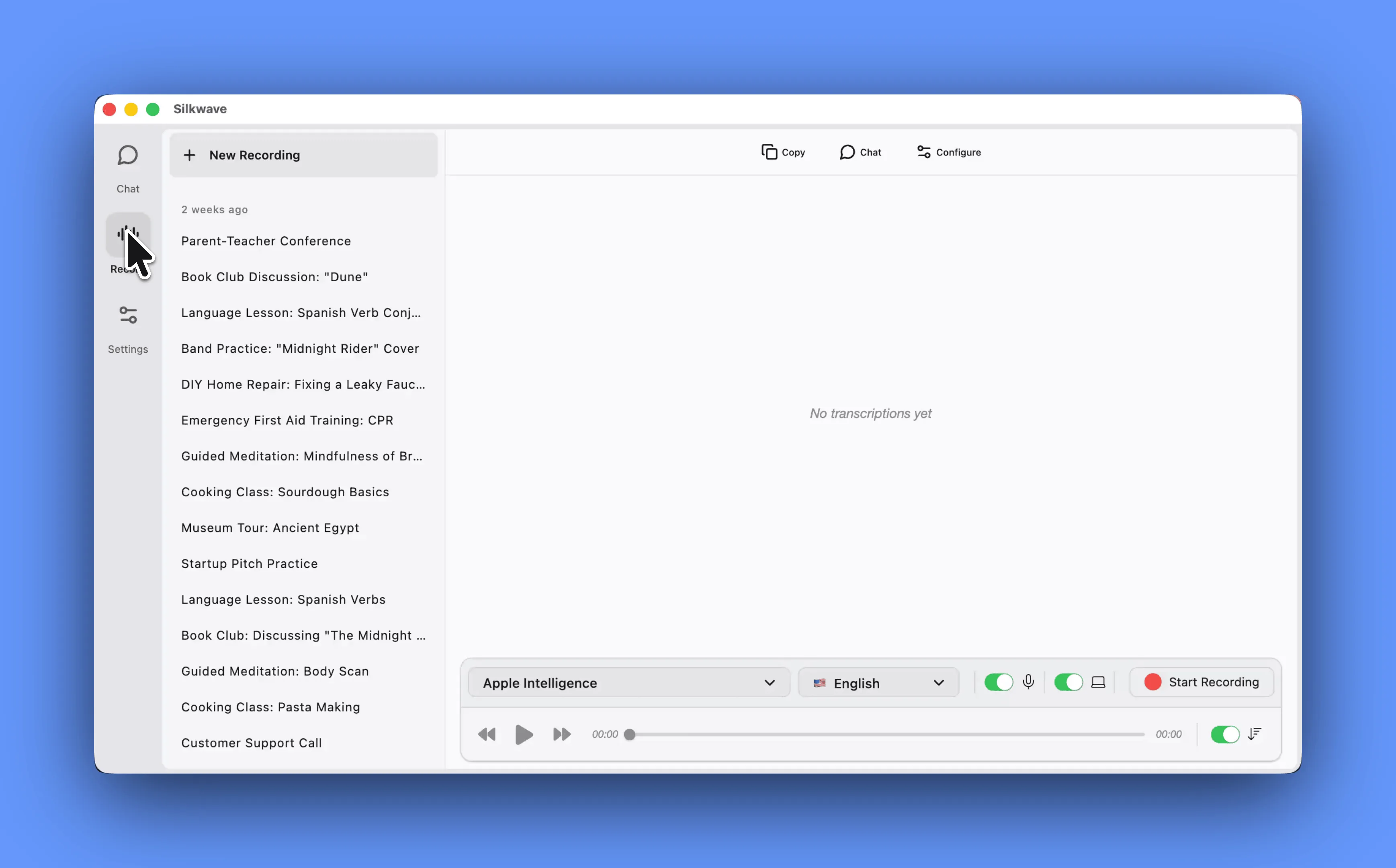
Silkwave Voice: On-Device AI Transcription for macOS – Private, No Subscriptions
Silkwave Voice is a macOS app that records and transcribes meetings, lectures, and podcasts in 10+ languages using Apple's on-device models, with ChatGPT-powered summaries and AI chat—all processed locally for privacy.
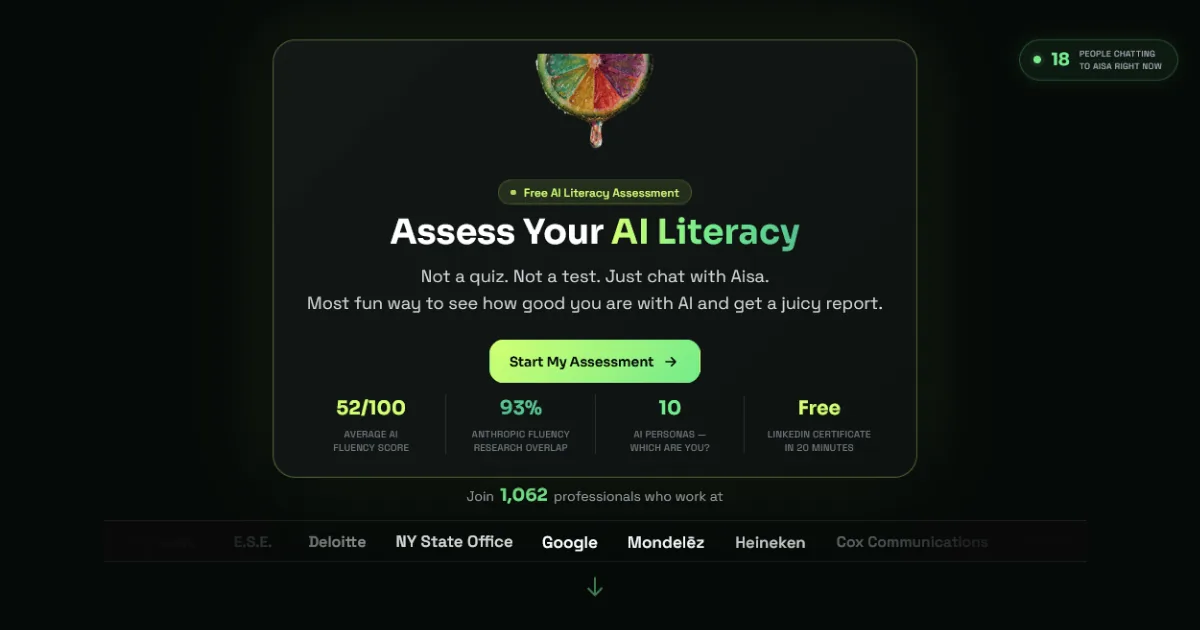
How AISA Is Redefining AI Literacy: A 20-Minute Conversational Assessment That Certifies Your Skills
AISA offers a free, 20-minute conversational AI assessment that measures your AI fluency across five dimensions, provides a personalized AI persona and score, and issues a LinkedIn-ready certificate. Backed by research from Anthropic and the U.S. Department of Labor, it's the most fun way to benchmark and showcase your AI skills.

How Autonomique Is Bringing Physical AI to Industrial Automation That Actually Works
Autonomique's physical AI enables robots to reason, plan, and adapt with human-like dexterity on production lines, delivering speed and reliability for automotive, aerospace, and electronics manufacturing.