How Emphere Automates Container Vulnerability Patching: A Deep Dive into Supply Chain Security
The Patch That Patches Itself: Inside Emphere's Automated Vulnerability Engine
Software supply chain security has become a bureaucratic nightmare dressed in technical clothing. Teams spend weeks triaging CVEs, testing compatibility, and rebuilding container images—only to repeat the process when the next vulnerability drops. Emphere, a Seattle-based startup emerging from the AI2 Incubator with $2.1 million in pre-seed funding, argues that this cycle is not just inefficient but fundamentally broken. The company's proposition is disarmingly simple: keep your Dockerfile exactly as it is, and let Emphere handle everything downstream.
The platform monitors upstream releases for open-source packages like OpenSSL, curl, Python, and NGINX, then automatically rebuilds base images with patched versions. The result is zero fixable CVEs across a container fleet, achieved without engineering teams changing a single line of their existing Dockerfiles. For companies selling to banking, healthcare, or government clients, where compliance frameworks like CIS and STIG are non-negotiable, this could be the difference between passing an audit and scrambling for emergency patches.
Product Curation & Core Value
Emphere's core offering is best understood through the lens of what it doesn't ask you to do. You do not need to migrate to a new base image. You do not need to restructure your CI/CD pipeline. You do not need to hire a dedicated security engineer to monitor CVE feeds. Instead, Emphere sits alongside your existing Dockerfile, mapping each layer to a hardened supply chain that it manages on your behalf.
The platform tracks 1,847 packages across distributions including Ubuntu, Debian, Alpine, Amazon Linux, and Red Hat UBI. When a new release drops—say, OpenSSL 3.0.19—Emphere's release monitor detects it within minutes. From there, the system runs a cascade analysis: it checks compatibility with your runtime (Python 3.11, Node.js, Go, Rust, etc.), resolves dependency chains (curl, git, wget, libssh), and performs a battery of security scans including SAST, CVE checks, and malware analysis.
What sets Emphere apart is its trust verification layer. The platform doesn't just check for known vulnerabilities; it examines code changes for suspicious patterns. The company's demo shows a blocked curl 8.11.0 release because a SAST scan detected an undocumented external call in lib/url.c that resolved to an attacker-controlled domain. This is supply chain integrity beyond the CVE database—catching backdoors and malicious commits before they ever reach your image.
Once the analysis passes, Emphere rebuilds the image. The output is Cosign-signed, multi-arch (ARM64 + AMD64), and pushed directly to the user's registry complete with SBOMs and SLSA provenance. The entire pipeline, from release detection to image deployment, happens in minutes rather than the weeks most teams experience with manual patching.
The platform also supports distroless images for runtimes like Python, Node.js, Java, Go, and Rust—stripped-down environments with no shell, no package managers, and minimal attack surface. For regulated industries, this is a significant advantage: you get the security of a minimal base image without the operational overhead of maintaining it yourself.
Technical Implementation & Strategy
Emphere's technical architecture is built around a fundamental insight: the container supply chain is not a single artifact but a layered dependency graph. Each layer in a Dockerfile—base OS, system libraries, runtime, application server—has its own update cadence, compatibility constraints, and security posture. Most patching tools treat this as a monolithic problem. Emphere deconstructs it.
The release monitor is the first piece. It tracks upstream repositories across GitHub, official package registries, and distribution maintainers. When a new version is published, Emphere doesn't just flag it; it immediately runs a compatibility matrix against every supported combination of OS, runtime, and library. This is computationally expensive but essential: a patch for OpenSSL might break Python's TLS configuration, which in turn could break your application's network calls. Emphere's cascade analysis models these dependencies and either confirms compatibility or blocks promotion.
The security scanning pipeline is equally sophisticated. Emphere runs multiple scanners in parallel: SAST for static code analysis, CVE matching against national vulnerability databases, and custom malware detection that looks for behavioral anomalies rather than just known signatures. The trust verification layer checks maintainer identity against known keys, validates cryptographic signatures, and cross-references commit histories for unusual patterns. This multi-layered approach means Emphere can block a release even if no CVE exists, simply because the code looks wrong.
On the output side, Emphere's image rebuilding is fully automated. The platform generates new images with the patched dependencies, signs them with Cosign using cloud KMS, and pushes them to the user's container registry. The rebuilt images retain the same Dockerfile structure—your application code and dependencies remain untouched—while every base layer is replaced with a hardened equivalent. The SBOM and SLSA provenance documents are generated automatically, providing auditors with a complete chain of custody.
The distribution strategy is deliberately low-friction. Emphere does not require you to change your Dockerfile or migrate to a new registry. You simply add Emphere as a build step, and the platform takes over the base image management. This is a deliberate design choice: the startup recognizes that the biggest barrier to adoption in regulated industries is operational disruption. By making the integration invisible, Emphere sidesteps the "not invented here" resistance that plagues many security tools.
Competitor Landscape & Industry Impact
The container security space is crowded, but Emphere occupies a specific niche that most competitors ignore. Companies like Snyk, Aqua Security, and Trivy focus on vulnerability scanning and alerting. They tell you what's broken. Emphere fixes it. This is a fundamentally different value proposition.
Snyk, for example, excels at identifying vulnerabilities in open-source dependencies and providing remediation advice. But the actual patching—testing compatibility, rebuilding images, updating CI/CD pipelines—remains a manual process. For a team managing 200 container images across multiple environments, that manual work can take weeks per CVE. Emphere's automation collapses that timeline to minutes.
Aqua Security offers runtime protection and policy enforcement, but its strength is in detection and response rather than proactive patching. Emphere operates further upstream, preventing vulnerabilities from ever reaching production images. The two tools are complementary rather than directly competitive, but Emphere's approach reduces the volume of alerts that Aqua would need to handle.
The closest competitor might be Chainguard, which offers hardened, minimal base images with known-good dependencies. Chainguard's approach is to provide a curated set of images that you adopt as your base. Emphere's approach is to take your existing images and patch them automatically. The trade-off is clear: Chainguard requires migration to a new image ecosystem, while Emphere works with what you already have. For organizations with deeply entrenched Dockerfiles and complex dependency chains, Emphere's zero-change integration is a significant advantage.
The industry impact of Emphere's approach could be substantial. If automated patching becomes reliable enough, it changes the economics of vulnerability management. Teams currently spend 30-40% of their security budget on remediation labor. Emphere automates that labor, shifting the bottleneck from patching to detection. This could drive a broader industry trend toward "self-healing" supply chains, where vulnerabilities are fixed before humans even know they exist.
However, there are trade-offs. Emphere's automation is only as good as its compatibility analysis. A false positive—blocking a safe release due to a spurious SAST finding—could delay critical updates. A false negative—missing a real vulnerability—could have catastrophic consequences. The platform's trust verification layer is innovative, but it introduces its own attack surface: if an attacker can manipulate the SAST scanner or the maintainer identity check, they could inject malicious code into the supply chain. Emphere will need to invest heavily in the security of its own pipeline to maintain credibility.
Brand Naming & Domain Identity Analysis
The name "Emphere" is a portmanteau of "empower" and "sphere," suggesting a protective environment that enables secure software delivery. It's memorable and distinctive, though it requires explanation on first encounter. The brand positions itself as a proactive, automated solution for regulated industries, emphasizing trust and integrity. The tagline—"Your Dockerfile has layers. We secure every one."—reinforces the value proposition with a clever play on the technical concept of Docker layers.
The domain emphere.com is a strong choice. It's short, pronounceable, and uses the .com TLD, which remains the gold standard for professional credibility. The exact match between the brand name and the domain is ideal for memorability and search visibility. In the context of the three pillars of domain strategy—AI Domain Naming, TLD Intelligence, and Startup Naming Playbook—Emphere scores well.
From an AI Domain Naming perspective, the name is algorithm-friendly: it's unique enough to avoid confusion with competitors, yet simple enough for voice search and natural language queries. The .com TLD provides the highest level of trust signals for search engines, which is critical for a security-focused startup.
From a TLD Intelligence standpoint, Emphere's choice of .com over newer TLDs like .security or .dev is strategic. While niche TLDs can be memorable, they often carry a premium pricing risk and may not be recognized as authoritative by older enterprise buyers. Emphere's target audience—DevOps and security teams at regulated companies—expects .com. The company's domain strategy aligns with the principle that your domain name is your first marketing asset, as discussed in Why Your Domain Name Is Your First Marketing Asset.
From a Startup Naming Playbook perspective, "Emphere" is abstract enough to avoid pigeonholing the company into a specific product category. This is important for future expansion: if Emphere eventually moves beyond container patching into broader supply chain security, the name won't limit its scope. The name also has a slight aspirational quality—"empower" suggests enabling teams to do more, while "sphere" implies a comprehensive, all-encompassing solution.
The potential downside is that "Emphere" sounds similar to "empire," which could create confusion in verbal conversations. The company will need to invest in brand recognition to ensure the name sticks. But given the target audience of technical buyers who value clarity over cleverness, the name is likely to be accepted once the product's value proposition is understood.
Growth & Future Outlook
Emphere's $2.1 million pre-seed round from AI2 Incubator is a strong signal of confidence, but it's a modest amount for the enterprise security space. The company will need to demonstrate rapid customer acquisition and revenue growth to secure subsequent funding rounds. The pre-seed round is explicitly earmarked for building "agentic vulnerability remediation capabilities," suggesting that Emphere plans to extend its automation beyond passive monitoring into active, AI-driven decision-making.
The growth trajectory will depend on several factors. First, the company must prove that its compatibility analysis is reliable enough for production environments. One high-profile failure—a broken patch that takes down a customer's application—could derail the entire business. Second, Emphere needs to build integrations with major CI/CD platforms (GitHub Actions, GitLab CI, Jenkins) and container registries (Docker Hub, AWS ECR, Google Container Registry) to reduce friction. Third, the company must navigate the regulatory landscape: selling to banking and healthcare clients requires SOC 2 compliance, HIPAA readiness, and possibly FedRAMP certification.
The future outlook is promising but contingent on execution. The container security market is growing at over 25% annually, driven by the adoption of Kubernetes and microservices. Emphere's automation-first approach addresses a genuine pain point that existing tools have failed to solve. If the company can scale its analysis engine to handle the long tail of open-source packages and maintain high reliability, it could become the default patching solution for regulated enterprises.
The "agentic" direction is particularly interesting. If Emphere can build AI agents that not only patch vulnerabilities but also make intelligent trade-offs between security and compatibility—for example, choosing a slightly older but more stable version over the latest release—it could differentiate itself further. This aligns with broader trends in AI Agents for Business: How Autonomous AI Is Transforming Startup Operations, where autonomous systems are taking over routine but high-stakes operational tasks.
The final expert take: Emphere is solving a real problem with a technically sound approach. The company's focus on zero-change integration and supply chain integrity gives it a clear advantage over scanning-only competitors. The risks are in execution: reliability, scalability, and regulatory compliance. If Emphere can deliver on its promise of automated, trustworthy patching, it has the potential to become a critical piece of infrastructure for the regulated enterprise. But the road from pre-seed to production is long, and the margin for error in security is zero.
Related
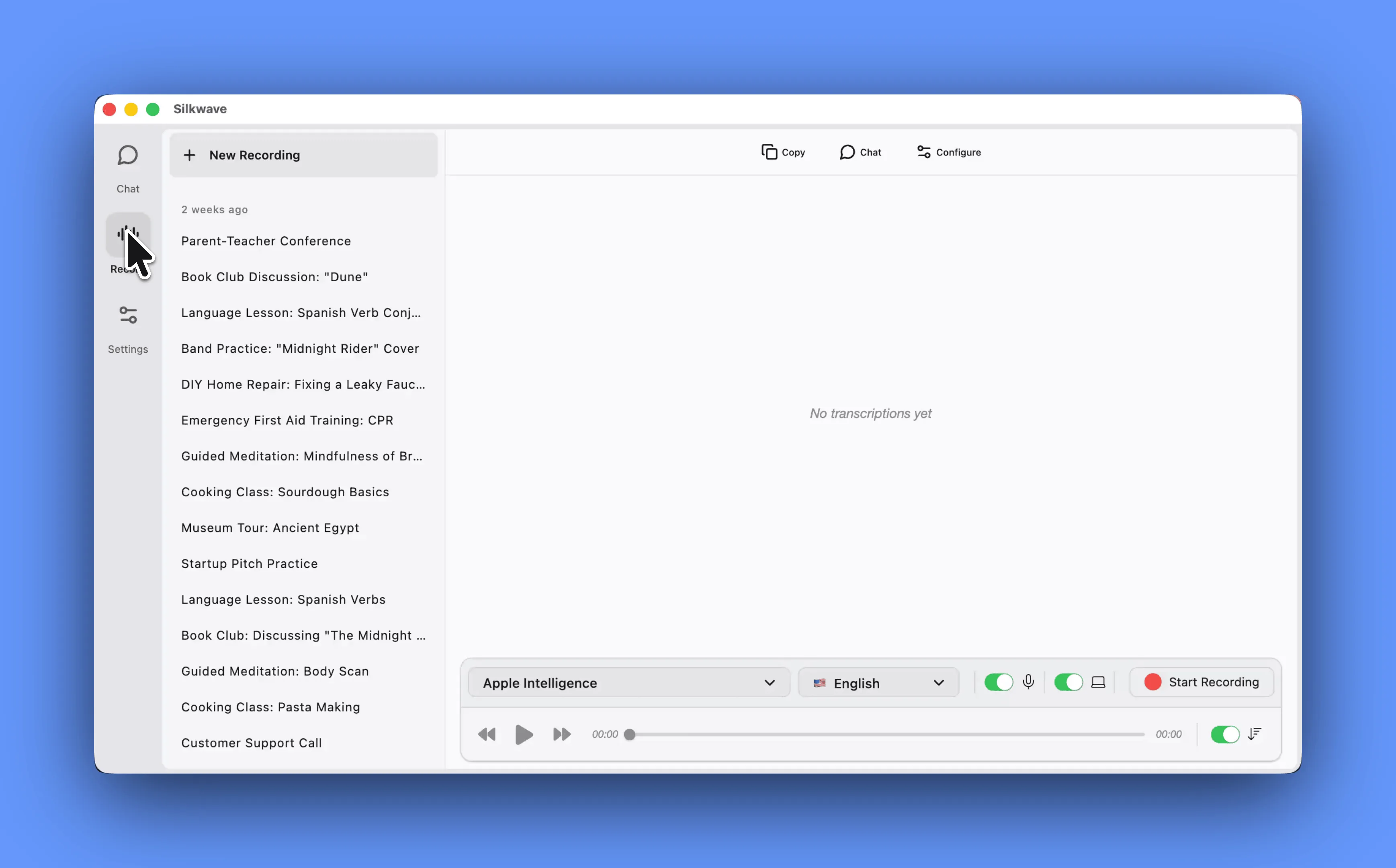
Silkwave Voice: On-Device AI Transcription for macOS – Private, No Subscriptions
Silkwave Voice is a macOS app that records and transcribes meetings, lectures, and podcasts in 10+ languages using Apple's on-device models, with ChatGPT-powered summaries and AI chat—all processed locally for privacy.
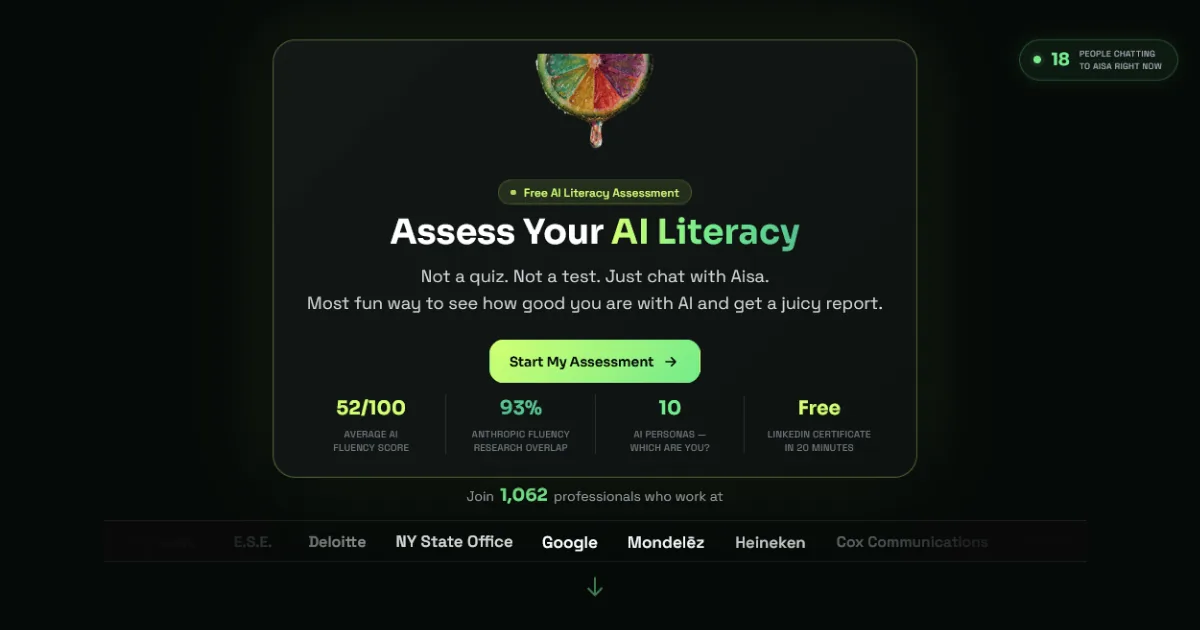
How AISA Is Redefining AI Literacy: A 20-Minute Conversational Assessment That Certifies Your Skills
AISA offers a free, 20-minute conversational AI assessment that measures your AI fluency across five dimensions, provides a personalized AI persona and score, and issues a LinkedIn-ready certificate. Backed by research from Anthropic and the U.S. Department of Labor, it's the most fun way to benchmark and showcase your AI skills.

How Waabi Is Redefining Autonomous Transportation with a Single Physical AI Brain
Waabi's revolutionary Physical AI platform uses a single, verifiable end-to-end model to power both autonomous trucks and robotaxis, promising safer, scalable, and more efficient transportation.