
Supabase: The Open Source Firebase Alternative Empowering Developers with Postgres
Product Curation & Core Value
Supabase is an open-source backend-as-a-service (BaaS) that aims to be the definitive alternative to Google's Firebase, but with a crucial twist: it's built entirely on PostgreSQL, the world's most trusted relational database. The core idea is deceptively simple: give developers a full Postgres database, then wrap it with all the services they need to build modern applications—authentication, instant REST and GraphQL APIs, real-time subscriptions, edge functions, file storage, and vector embeddings for AI workloads.
The problem Supabase solves is the painful trade-off developers have faced for years. Firebase offers a rapid development experience with its real-time database, authentication, and hosting, but it locks you into a proprietary NoSQL data model that's difficult to migrate away from. On the other hand, rolling your own backend with Postgres gives you full control and portability, but requires significant DevOps effort to set up authentication, APIs, and real-time features. Supabase bridges this gap by offering the developer experience of Firebase with the power and flexibility of Postgres.
The product is not a single tool but a platform of integrated services. At its foundation is Postgres Database—every Supabase project is a full, dedicated Postgres database with 100% portability. You can export your data and move it anywhere. This is a deliberate design choice that sets it apart from Firebase's proprietary database. On top of this, Supabase provides Authentication with built-in Row Level Security (RLS), allowing developers to define granular access policies directly in the database. Edge Functions let you write custom server-side code without managing servers, running on Deno at the edge. Storage handles large files like images and videos. Realtime enables live data synchronization for multiplayer experiences, chat apps, and collaborative tools. Vector support allows you to store and search embeddings from AI models like OpenAI and Hugging Face. And Data APIs automatically generate RESTful and GraphQL endpoints from your database schema.
What makes this compelling is the "best of breed, integrated as a platform" philosophy. Instead of stitching together a dozen separate services—Auth0 for authentication, Cloudflare Workers for edge functions, S3 for storage, and Pinecone for vectors—Supabase offers them all in one cohesive platform. The integrations are deep: your authentication policies are enforced at the database level via RLS, your edge functions can directly query the database, and your real-time subscriptions work with the same data model.
The platform has already proven itself with demanding customers. Pebblely scaled to one million users in seven months using Supabase. Chatbase used it to move upmarket. Firecrawl switched from Pinecone to Supabase Vector, reporting better efficiency and accuracy. The customer roster includes Mozilla, GitHub, 1Password, PwC, Pika, Humata, Udio, LangChain, Resend, and many others. This isn't a toy or a prototype tool—it's production infrastructure for serious companies.
Technical Implementation & Strategy
Supabase's technical architecture is both its greatest strength and its most interesting design decision. Rather than building everything from scratch, the team assembled and integrated existing open-source technologies into a cohesive platform. The database is PostgreSQL, the authentication layer uses GoTrue (a Go-based authentication server), the real-time engine is built on top of PostgreSQL's logical replication, and the edge functions run on Deno. The REST API is generated by PostgREST, and the GraphQL API uses pg_graphql.
This "best of breed" approach has several advantages. First, it leverages the massive ecosystem of PostgreSQL extensions and tools. Developers can use pgvector for AI embeddings, pg_cron for scheduled tasks, PostGIS for geospatial queries, or any of the hundreds of other extensions. Second, it means Supabase is not a black box. Because the underlying components are open source, developers can inspect, extend, and even self-host the entire platform. Third, it ensures portability—you can take your Postgres database and run it anywhere, on any cloud provider, without vendor lock-in.
The Row Level Security system is particularly elegant. Instead of implementing authentication as a separate layer that talks to the database, Supabase pushes security policies directly into Postgres. A developer writes SQL policies like "allow select on orders where user_id = auth.uid()", and these policies are enforced at the database level, regardless of how the data is accessed—through the API, through a direct database connection, or through an edge function. This eliminates a whole class of security bugs where the API layer forgets to check permissions.
The Realtime feature deserves special attention. Most real-time platforms require you to set up WebSocket servers, manage connections, and handle scaling. Supabase's real-time engine uses PostgreSQL's logical replication to listen for changes in the database and broadcast them to connected clients. This means you get real-time updates automatically, without writing any custom code. The same mechanism that powers the real-time subscriptions also powers the database triggers and notifications.
Edge Functions run on Deno, a modern runtime for JavaScript and TypeScript that's built on V8 and Rust. Deno offers several advantages over Node.js for edge computing: it has built-in TypeScript support, a secure sandboxed environment, and a standard library that's designed for server-side use. Supabase's edge functions are deployed globally on the same infrastructure that powers the rest of the platform, giving developers low-latency compute at the edge.
The Vector support is particularly timely given the explosion of AI applications. Supabase uses the pgvector extension to store and search embeddings directly in the database. This means developers can build semantic search, recommendation systems, and RAG (Retrieval-Augmented Generation) pipelines without adding a separate vector database. The tight integration with the rest of the platform means you can combine vector search with authentication, real-time updates, and edge functions in a single query.
From a distribution perspective, Supabase has executed a textbook open-source growth strategy. The core platform is free and open source, hosted on GitHub with a permissive Apache 2.0 license. The company offers a hosted version with a generous free tier, and monetizes through paid plans that add features like advanced security, dedicated support, and higher resource limits. This model has attracted a massive community—48,000 followers on Product Hunt, 817 reviews with a perfect 5.0 rating, and 16 separate launches.
Competitor Landscape & Industry Impact
The competitive landscape for backend services is crowded, but Supabase has carved out a distinct position. The most direct comparison is with Firebase, Google's proprietary BaaS. Firebase offers a similar set of services—authentication, real-time database, storage, hosting, and functions—but with a fundamentally different data model. Firebase's Firestore is a NoSQL document database that's fast to get started with but becomes painful as your data grows more relational. Supabase's Postgres foundation means you get relational queries, joins, foreign keys, transactions, and the full power of SQL from day one.
The trade-off is that Firebase's real-time database is more mature for certain use cases. Firebase's real-time synchronization works at a lower level, syncing individual field changes rather than entire rows. For applications that need granular real-time updates on thousands of concurrent users, Firebase's approach can be more efficient. Supabase's real-time engine, while elegant, is still catching up in terms of raw performance and feature completeness.
Appwrite is another open-source BaaS competitor. Like Supabase, it offers authentication, databases, storage, and functions. The key difference is that Appwrite uses its own custom database rather than PostgreSQL. This gives Appwrite more flexibility in its API design, but it also means you're locked into Appwrite's data model. Supabase's bet is that developers prefer the familiarity, portability, and ecosystem of PostgreSQL over a custom solution.
PocketBase is a lighter-weight alternative that's popular for smaller projects. It's a single Go binary that includes a SQLite database, authentication, and a built-in admin UI. PocketBase is simpler to deploy and manage, but it doesn't scale to the same level as Supabase and lacks features like edge functions and vector search.
Neon is a serverless PostgreSQL provider that competes on the database layer specifically. Neon offers features like branching, bottomless storage, and instant scaling that Supabase doesn't match. However, Neon is just a database—you'd need to add authentication, storage, and real-time features separately. Supabase's value proposition is the integrated platform.
The industry impact of Supabase has been significant. It has legitimized the idea that an open-source BaaS can compete with Google's Firebase. It has demonstrated that PostgreSQL can serve as the foundation for modern application development, including AI workloads. And it has pushed the entire ecosystem forward—Firebase has responded with better support for relational data models, and other BaaS providers have added PostgreSQL support.
Perhaps most importantly, Supabase has changed the conversation around vendor lock-in. By building on an open-source database with a standard SQL interface, Supabase ensures that customers can leave at any time. This is a powerful selling point for enterprises and startups alike, who have been burned by proprietary platforms that make migration prohibitively expensive.
Brand Naming & Domain Identity Analysis
The name "Supabase" is a portmanteau of "supreme" and "base" (as in database). It's a confident, almost audacious name that positions the product as the ultimate foundation for building applications. The "supreme" prefix suggests superiority, while "base" evokes the idea of a solid foundation. Together, they communicate "the best database platform" without being overly technical or jargon-heavy.
From a naming strategy perspective, Supabase follows the same pattern as its primary competitor Firebase. Both names use a two-syllable structure with "base" as the second component. Firebase suggests something fast and powerful (fire + base), while Supabase suggests something even better (supreme + base). This is a clever bit of competitive positioning—the name itself tells developers that Supabase is the superior alternative.
The choice of the .com domain for Supabase is worth examining. The company operates at supabase.com, which is a strong, memorable domain. The .com TLD remains the gold standard for software companies, especially those targeting a global developer audience. It signals credibility, stability, and mainstream acceptance. For a company that's positioning itself as the open-source alternative to a Google product, the .com domain reinforces the message that this is a serious, production-grade platform.
The domain is short, easy to type, and easy to remember. The "supa-" prefix is distinctive and unlikely to be confused with other brands. It also works well internationally—the name doesn't have cultural baggage or unintended meanings in major languages.
From the perspective of AI-powered domain generation, Supabase's name follows several best practices. It's short (8 characters), uses a common prefix, has a clear semantic meaning, and is easy to pronounce. The name also aligns with the startup naming playbook of using a "super" prefix to convey superiority—similar to Superhuman, Supercell, or Supermicro.
The domain also demonstrates the importance of choosing a TLD that matches your brand identity. While there are newer TLDs like .app, .dev, and .io that are popular among developer tools, Supabase's choice of .com is a strategic decision. It signals that the company is not just a niche developer tool but a platform for mainstream application development. The .com TLD carries weight and trust that alternative TLDs still struggle to match.
For startups considering their domain strategy, Supabase's approach offers a useful case study. The name itself is distinctive and memorable, the .com domain was available (likely acquired at a reasonable price), and the combination creates a strong brand identity. This is in contrast to many modern startups that settle for awkward hyphenated names or obscure TLDs because the .com is taken.
Growth & Future Outlook
Supabase's growth trajectory has been impressive. From its first Product Hunt launch to its current status as a platform trusted by Mozilla, GitHub, and 1Password, the company has executed a disciplined growth strategy focused on developer experience, open-source community building, and product excellence.
The immediate future looks bright. The AI boom has created massive demand for vector databases, and Supabase's pgvector integration positions it perfectly for this market. Companies building RAG pipelines, semantic search, and AI agents need a database that can handle both structured data and embeddings. Supabase offers exactly that, with the added benefit of authentication, real-time updates, and edge functions in the same platform.
The company's focus on Postgres is also well-timed. PostgreSQL has been gaining market share for years, and it's now the most popular database among developers according to Stack Overflow surveys. The rise of serverless Postgres solutions like Neon and the increased support from cloud providers has made Postgres even more attractive. Supabase is riding this wave.
There are challenges ahead. The BaaS market is competitive, with well-funded competitors like Firebase (Google), Appwrite, and AWS Amplify. Scaling the platform to handle enterprise workloads while maintaining the simplicity that developers love is a difficult balance. The company will need to continue investing in performance, reliability, and security to win enterprise customers.
Another challenge is the complexity of maintaining an open-source platform that integrates multiple best-of-breed components. Each component—PostgreSQL, GoTrue, PostgREST, Deno, pgvector—has its own release cycle and upgrade path. Keeping everything compatible and up-to-date requires significant engineering effort.
But the fundamentals are strong. The product solves a real problem for developers, the open-source model builds trust and community, and the Postgres foundation provides a defensible moat against competitors. The customer stories demonstrate real business value—Pebblely scaling to a million users, Rally building a fintech app in three months, Firecrawl switching from Pinecone for better performance.
Looking ahead, expect Supabase to deepen its AI integrations, add more enterprise features like audit logging and compliance certifications, and continue expanding its ecosystem of templates and integrations. The platform is well-positioned to become the default backend for a generation of developers who want the power of Postgres without the operational overhead.
For developers evaluating backend platforms, Supabase represents a compelling option. It offers the rapid development experience of Firebase with the
Related
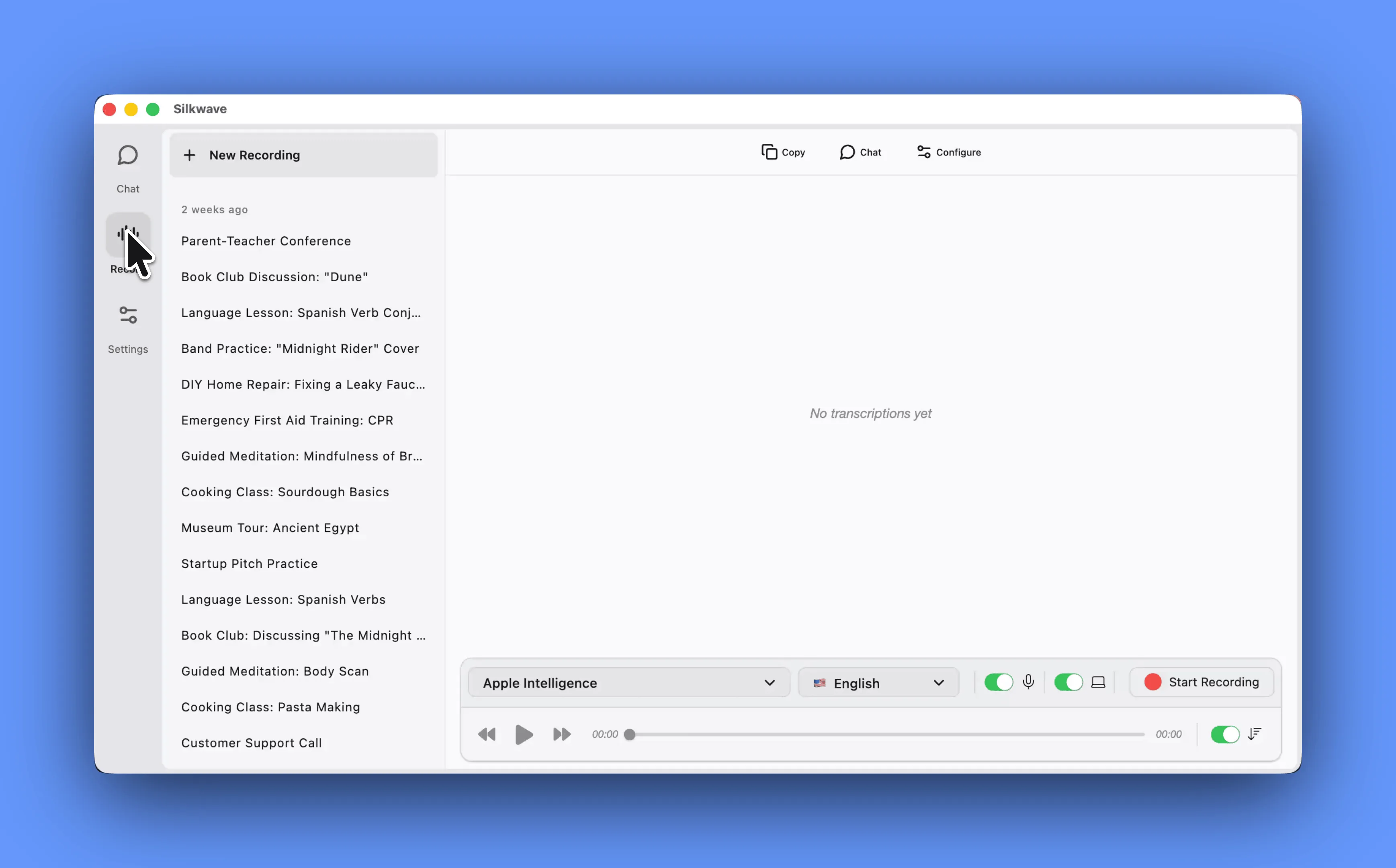
Silkwave Voice: On-Device AI Transcription for macOS – Private, No Subscriptions
Silkwave Voice is a macOS app that records and transcribes meetings, lectures, and podcasts in 10+ languages using Apple's on-device models, with ChatGPT-powered summaries and AI chat—all processed locally for privacy.

How AISA Is Redefining AI Literacy: A 20-Minute Conversational Assessment That Certifies Your Skills
AISA offers a free, 20-minute conversational AI assessment that measures your AI fluency across five dimensions, provides a personalized AI persona and score, and issues a LinkedIn-ready certificate. Backed by research from Anthropic and the U.S. Department of Labor, it's the most fun way to benchmark and showcase your AI skills.

How Waabi Is Redefining Autonomous Transportation with a Single Physical AI Brain
Waabi's revolutionary Physical AI platform uses a single, verifiable end-to-end model to power both autonomous trucks and robotaxis, promising safer, scalable, and more efficient transportation.